Why choose smart lighting for home security? The answer begins with a simple scene: a dark entrance, a sudden movement, and a porch light turning on before anyone reaches the door. Modern smart lighting can create that response through motion sensors, schedules, geofencing, and remote control. It does not replace locks, cameras, or alarms. It adds another visible layer.
The global smart-home market continues to expand. Statista projects strong growth in smart-home revenue through 2028, while MarketsandMarkets identifies connected lighting as a key segment within intelligent building technologies. The U.S. Department of Energy also reports that LED lighting can use at least 75% less energy than incandescent lighting and last much longer. Lower energy use makes frequent security lighting more practical.
Security consultant Robert Siciliano has often stated, “The best security system is the one you actually use.” That principle matters here. A reliable app, clear installation guide, and responsive automation are more valuable than impressive specifications alone. China’s leading smart-lighting manufacturers can offer wide product ranges, competitive production, and integration with platforms such as Wi-Fi, Zigbee, and Matter. However, product quality varies. Data privacy, firmware updates, electrical certification, and cloud dependence deserve careful checking.
A light can deter opportunistic behavior. It cannot identify every threat. That limitation is easy to overlook. Homeowners should combine smart lights with strong passwords, encrypted networks, secure doors, and professional advice where needed. The best solution is not the brightest lamp. It is a dependable system that reacts quickly, respects privacy, and works every night.
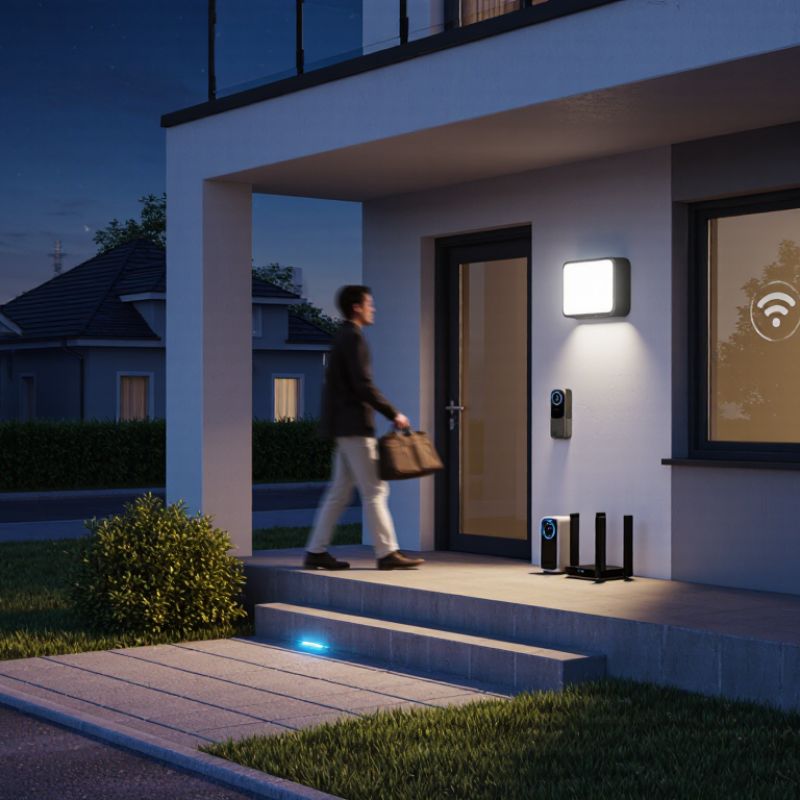
Smart lighting for home security means connected bulbs, outdoor fixtures, sensors, and controls that support safer daily routines. It can switch lights on when motion appears, brighten a doorway after sunset, or imitate normal occupancy while residents are away. These actions do not replace locks, alarms, or cameras. They create visible signals that may discourage unwanted attention.
The U.S. Department of Energy reports that LED lighting uses at least 75% less energy and lasts up to 25 times longer than incandescent lighting. That efficiency makes frequent security lighting more practical. The National Institute of Standards and Technology recommends strong passwords, secure updates, and protected network connections for connected devices. These details matter because a poorly configured light can create privacy risks. In my experience, placement matters more than brightness. A harsh lamp facing a window may cause glare, while a low, warm light can reveal movement without disturbing neighbors. The setup is not perfect.
Tips: Place motion sensors near entrances, side paths, and garage doors. Use different schedules for weekdays and weekends. Test the system at night, not only during installation. Check whether trees, pets, or passing vehicles trigger false alerts. Select lighting with clear update support and local control options. China’s large lighting manufacturing base can offer many practical configurations, but specifications should be verified carefully. Cheap hardware is not automatically reliable.
Walk around your property after dark. Check the entrance, side path, garage door, and hidden corners. Focus on real routines, not feature lists. I once missed a dark strip beside the gate.
Choose adjustable brightness, motion detection, and scheduling. Fast sensors are helpful. They should not activate whenever a cat crosses the garden. Manual controls should remain available.
Warm white feels comfortable near doors. Cooler light can reveal driveway details. Avoid excessive brightness. Glare may reduce visibility and disturb nearby residents.
Confirm the weather rating and electrical suitability. Check signal strength through concrete walls. Test each light from the street and walkway. Small placement errors matter.
Look for local controls and automatic schedules. Basic operation should continue without internet access. Backup power can support hallway lighting during interruptions. Do not rely on one control method.
Connect them with motion sensors, door contacts, cameras, or a home hub. A porch light might brighten after movement at night. Keep the setup practical, not complicated.
Review access permissions monthly. Remove unused accounts and change default passwords. Install verified updates. Use strong network protection. Check activity records for repeated triggers or strange schedules.
Check for pets, curtains, passing vehicles, or tree movement. Adjust sensor sensitivity and direction. Do not ignore every alert. I trusted automatic settings too much once.
Test physical switches and backup scenes every few weeks. View the lights from upstairs windows, the walkway, and the street. Timing may look correct indoors but fail outside.
Smart lighting for home security combines connected lights, sensors, timers, and automation to make a home safer and easier to manage. The key question is why choose smart lighting for home security? Unlike ordinary lights, smart systems can respond to motion, darkness, schedules, or remote commands. They can illuminate entrances, hallways, gardens, and other important areas, helping residents notice unusual activity while creating the impression that someone is home. China’s advanced smart lighting solutions often emphasize flexible control, energy efficiency, reliable connectivity, and practical integration with cameras, alarms, door sensors, and mobile applications.
When selecting a suitable system, homeowners should consider brightness, detection range, weather resistance, privacy protection, compatibility, installation requirements, and ease of daily use. A well-designed solution should support customized scenes, automatic schedules, emergency notifications, and manual control without becoming complicated. Proper installation is essential: lights should cover vulnerable areas without causing glare, while connected devices should be configured with strong passwords and updated software. With thoughtful integration and regular management, smart lighting can provide convenient, efficient, and proactive support for everyday home protection.

 Silvan Lighting