Choosing the right indoor lighting is crucial for creating an inviting atmosphere. When deciding between warm white and cool white, understanding their effects is essential. A recent report from the Lighting Research Center indicated that 70% of people prefer warm white light for living spaces. This preference stems from its ability to evoke comfort and relaxation.
Renowned lighting expert Dr. Emily Johnson states, "Lighting color temperature impacts mood and productivity more than most realize." Her insights highlight the significance of selecting the right hue. Warm white typically ranges from 2700K to 3000K, providing a cozy ambiance. In contrast, cool white, from 3500K to 4100K, often enhances alertness, making it ideal for workspaces.
When exploring why use warm white vs cool white indoors, reflect on the environment you wish to create. Do you want a serene living room or an energizing kitchen? The choice influences not only aesthetics but also emotional responses. Engaging with lighting thoughtfully allows for personal expression while underscoring the importance of informed decisions in design.
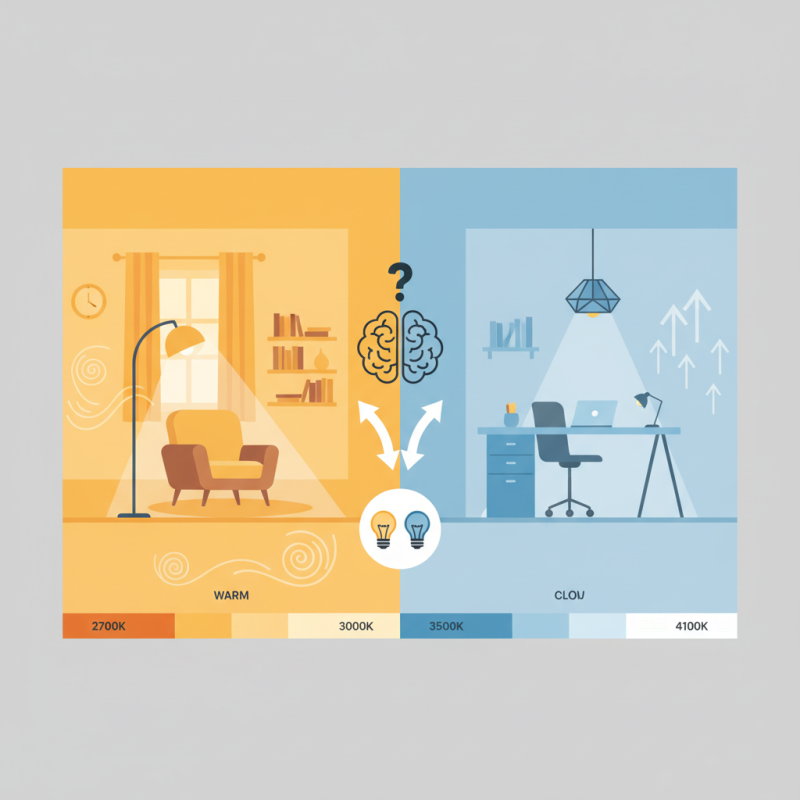
When choosing indoor lighting, understanding color temperature is crucial.
Warm white light typically ranges from
2700K to 3000K. It creates a cozy atmosphere. This is ideal for
living rooms and
bedrooms.
Cool white light, on the other hand, ranges from
3500K to 4100K. It gives a brighter, more energetic feel.
This is often preferred in
kitchens and
workspaces.
Different settings call for specific lighting. Warm light can make a space feel inviting. Yet, it may not be
the best choice for tasks requiring focus. Cool light helps with concentration but can feel harsh if overused.
Understanding your needs is important.
It’s also worth noting that personal preference plays a role. Some may find cool white too clinical. Others
might feel warm white doesn’t provide enough illumination. Testing both options in your space could be beneficial.
Observe how each affects your mood and
productivity. This trial-and-error approach often leads
to the best results.
Warm white lighting creates a comforting environment in residential spaces. This color temperature, typically between 2700K to 3000K, mimics the soft glow of candlelight. It invites relaxation, making it ideal for living rooms, bedrooms, and dining areas. The gentle illumination enhances a sense of homeliness. It allows family gatherings to feel warm and inviting.
Unlike cool white lighting, which can appear stark, warm white offers a soothing ambiance. It highlights natural wood tones and other organic materials beautifully. This light helps create depth in a room. It also positively affects mood. People feel calmer and more connected in spaces lit by warm white light. In children's rooms, it helps set a tranquil atmosphere for bedtime.
There can be downsides, though. Some may struggle with inadequate visibility for tasks like reading or cooking. Effects vary depending on the light fixture and the color of the walls. Finding the perfect balance requires thoughtful consideration. Experimenting with different light sources can be beneficial. Warm white lighting should be part of a well-rounded lighting strategy in any home.
| Aspect | Warm White Lighting | Cool White Lighting |
|---|---|---|
| Color Temperature | 2700K - 3000K | 4000K - 5000K |
| Ambiance | Cozy, inviting, relaxing | Bright, energizing, alert |
| Ideal for Rooms | Living rooms, bedrooms, dining areas | Kitchens, offices, workspaces |
| Mood Enhancement | Promotes relaxation and comfort | Enhances focus and productivity |
| Energy Efficiency | Greater warmth can lead to lower energy use in chilly weather | May require higher wattage for the same brightness |
Cool white lighting offers several benefits in indoor environments, particularly in workplaces. Research indicates that cool white light can improve concentration and boost productivity. A study by the Heschong Mahone Group found that employees exposed to bright, cool light performed tasks with 10-20% higher accuracy compared to those under warmer tones. The clarity of cool white light enhances focus, which is crucial in today’s fast-paced work culture.
In settings such as offices, retail spaces, and classrooms, cool white light can create an environment conducive to learning and efficiency. The light mimics daylight, reducing fatigue and eye strain. An illuminating report from the International Journal of Environmental Research and Public Health supports this, stating that proper lighting in workspaces can increase overall job satisfaction by up to 30%. Despite its advantages, some individuals may find cool white light too harsh, leading to discomfort over time. Striking a balance between cool and warm lighting may often be necessary to cater to diverse needs.
Careful consideration of lighting choices impacts mood and productivity. While cool white lighting excels in certain applications, it may not suit every scenario. Understanding individual preferences and environmental contexts is crucial for creating a comfortable and efficient space. The effectiveness of lighting should always prompt ongoing evaluation and adjustments as needed.
When considering indoor lighting, the choice between warm white and cool white LED bulbs greatly affects energy efficiency. Studies indicate that warm white bulbs, emitting a softer, yellowish light, can create a cozy ambiance. This is often preferred in living areas and bedrooms. In contrast, cool white bulbs give off a bluish tone. They are better suited for kitchens and bathrooms, where clarity is essential.
Tips: To maximize efficiency, use warm white bulbs in low-traffic areas. For areas needing bright lighting, choose cool white.
Research reveals that warm white LED bulbs typically consume less energy without compromising brightness. They tend to last longer too, providing significant savings over time. However, cool white bulbs shine brighter. They are ideal for specific tasks, like reading or cooking.
Consider the mood you want to create. Reflect on how color temperature impacts your everyday life. Some find cool whites harsh during long evenings. Experimenting with different settings can guide you to the best fit for your space.
Tips: Test bulbs in various rooms before making a final decision. Adjusting wattage can also influence your comfort. Always look for energy ratings when selecting bulbs for sustainability.
When choosing lighting for indoor spaces, the color temperature greatly impacts ambiance. Warm white light creates a cozy, inviting environment, ideal for living rooms and bedrooms. This soft glow mimics candlelight and serves to enhance relaxation. It can make gatherings feel more intimate, but it might not be the best choice for productive workspaces.
On the other hand, cool white light offers a bright, energizing atmosphere. It's perfect for kitchens and home offices. The clarity and vibrancy of this light help improve focus and overall mood during tasks. However, excessive use can lead to feelings of harshness or sterility. Striking the right balance between these temperatures can be challenging, as personal preferences and room function vary greatly.
Consider how different light temperatures affect your daily routines. A warm light might help you unwind but can dim your productivity when working late. Cool light can invigorate but may disrupt relaxation at night. Experimenting with both types in various settings can guide you in making an informed decision.
: Warm white light, ranging from 2700K to 3000K, is ideal for a cozy atmosphere.
Cool white light, ranging from 3500K to 4100K, is often preferred in kitchens and workspaces.
Cool white lighting can improve concentration and boost productivity by enhancing focus and clarity.
While warm white light feels inviting, it may not provide the best illumination for focused tasks.
Consider your personal preferences and how each color temperature affects your mood and productivity.
Some may find warm white light creates a more inviting space but might lack sufficient brightness.
Some individuals may find cool white light too harsh, leading to discomfort during prolonged use.
Always reflect on how different lighting impacts your comfort and productivity; adjust as needed for best results.
Warm white LED bulbs generally consume less energy and last longer, providing savings over time.
Test various bulbs in different rooms to see which best fits the desired ambiance and functionality.
When considering indoor lighting, understanding the color temperature is essential, as it directly affects the ambiance and functionality of a space. Warm white light, typically ranging from 2700K to 3000K, creates a cozy and inviting atmosphere, making it ideal for residential environments where comfort is a priority. In contrast, cool white light, with a temperature of around 4000K to 5000K, is suited for workspaces and areas requiring enhanced productivity and focus.
When evaluating why use warm white vs cool white indoors, it’s crucial to assess the specific needs of each environment. Warm white lighting fosters relaxation and comfort, making it perfect for living rooms and bedrooms, while cool white lighting aids concentration, making it beneficial for offices and kitchens. Additionally, industry data suggests that both warm and cool white LED bulbs offer energy efficiency, allowing for informed choices that balance ambiance with sustainability. Ultimately, the decision hinges on the desired atmosphere and the functions of the respective spaces.

Silvan Lighting