Creative lighting is no longer limited to making a room brighter. It shapes mood, movement, comfort, and identity across homes, hotels, retail spaces, and public environments. So, what are the latest trends in creative lighting design? The answer involves more than striking fixtures or dramatic colors. Designers are combining energy-efficient LEDs, responsive controls, natural light, and carefully layered illumination. Human-centered lighting is gaining attention, especially in workplaces and healthcare settings. Tunable white systems can shift from cooler morning tones to warmer evening tones. The result can feel more natural. Yet, comfort must remain the priority.
Current projects also explore immersive lighting, sculptural pendants, discreet linear sources, and projection-based installations. Smart sensors adjust brightness when daylight changes or occupancy drops. This saves energy, but automation is not always perfect. Sensors can misread movement. App-based systems can confuse users. Experienced designers test controls on site, rather than trusting specifications alone. They also assess glare, shadow quality, color rendering, maintenance access, and accessibility. These details separate a beautiful concept from a dependable installation.
Sustainable design is becoming more practical. Longer-lasting components, repairable systems, recyclable materials, and responsible energy planning now influence purchasing decisions. Professional teams often compare visual performance with recognized building and energy requirements. They document lighting levels and review mock-ups before installation. Still, no single trend suits every project. A soft residential scheme may fail in a busy gallery. A spectacular installation may consume too much power. Good creative lighting balances emotion, technical evidence, environmental responsibility, and real human behavior. Mistakes can reveal better solutions. That reflection keeps the field moving.
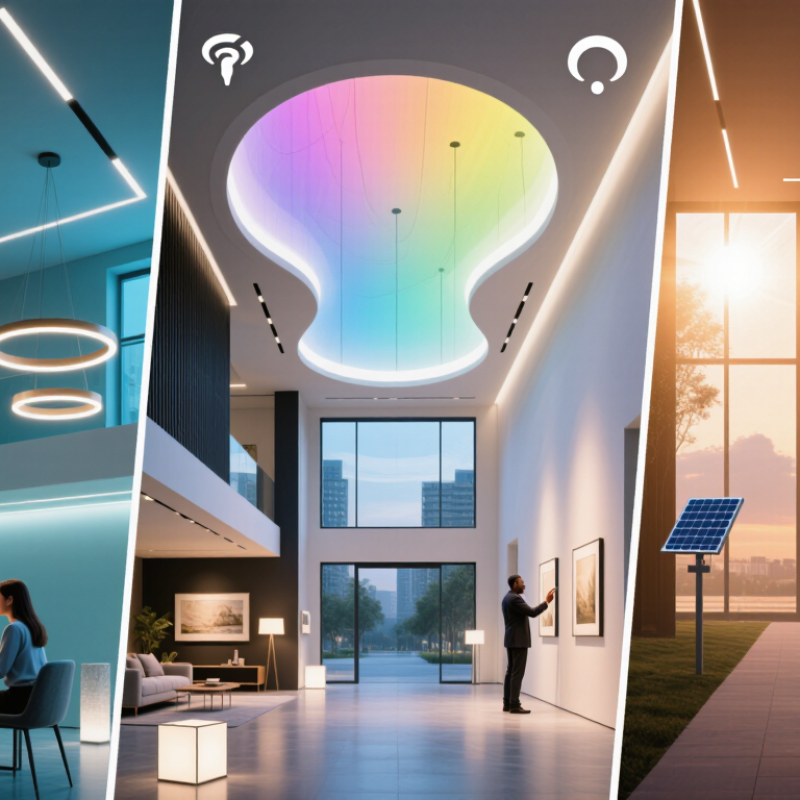
Creative lighting design is the deliberate use of light, shadow, color, and control to shape how people experience a space. It is not decoration added after architecture. A well-designed scheme can guide movement, reveal textures, support concentration, or make a small room feel calmer. In practice, designers often layer ambient light, task light, and carefully aimed accent light. The result should feel natural, not theatrical.
Its role is also environmental. The International Energy Agency reports that lighting consumes about 15% of global electricity. The United Nations Environment Programme’s 2023 buildings report states that buildings account for roughly 30% of global final energy use. These figures make efficient lighting more than a technical preference. Dimmable LEDs, occupancy sensors, daylight response, and adaptive controls can reduce unnecessary consumption while preserving visual comfort. Human-focused designs are also gaining attention, using warmer evening light and reduced glare to support daily rhythms.
Technology helps, but it does not replace judgment. Sensors may react too slowly, and automated scenes can feel intrusive. I have seen beautiful installations become uncomfortable when bright reflections reached eye level. That mistake is easy to repeat. The U.S. Department of Energy notes that LED products use at least 75% less energy than incandescent lighting and last much longer. Yet efficiency alone is not creative design. Material finishes, beam angles, color rendering, maintenance access, and user feedback still determine whether a space works. The field sometimes overpromises. Good lighting remains measured, adjustable, and visibly connected to human experience.
Creative lighting design combines ambient, task, accent, and decorative lighting to shape how people experience a space. These indicative maintained illuminance benchmarks show why modern designers increasingly use layered lighting: circulation areas need lower background illumination, while work, learning, and detailed visual tasks require higher levels. Tunable white light, energy-efficient LEDs, daylight integration, sensors, and human-centered controls are now commonly used to make spaces more flexible and comfortable.
Indicative values based on commonly referenced EN 12464-1 and professional lighting-practice guidance; exact requirements vary by activity, surface reflectance, glare control, and local regulations.
Creative lighting is moving from static fixtures toward responsive environments. LEDs now support precise color, dimming, and compact architectural forms. The U.S. Department of Energy reports that LED products use at least 75% less energy and last up to 25 times longer than incandescent lighting.
Sensors and artificial intelligence are changing how spaces react. Occupancy sensors can reduce unnecessary illumination in empty corridors. Cameras and environmental monitors can adjust brightness, color temperature, and contrast. The International Energy Agency estimated that lighting represented about 15% of global electricity consumption in its Energy Efficiency 2017 report. This makes intelligent control more than a visual upgrade. It becomes an operational decision. Yet automated lighting can feel cold when designers trust data too much. A perfect response is not always a human response.
Tips: Start with a small test zone. Measure glare, energy use, and user comfort. Use warm light near seating areas, then cooler light near task surfaces. Check the space at dawn, noon, and night. The result may expose flaws. That is useful. Emerging systems, including LiFi, OLED surfaces, projection mapping, and digital twins, also demand careful maintenance planning. Research firm MarketsandMarkets projected strong growth for smart lighting through 2029, reflecting wider investment in connected infrastructure. However, forecasts are not guarantees. Creative teams should document control settings, accessibility concerns, and repair needs before installation. A dramatic ceiling may impress visitors, but a flickering sensor can quickly destroy trust.
Creative lighting is moving beyond visual drama toward lower energy use and lighter environmental footprints.
The International Energy Agency reports that lighting uses about 15% of global electricity. Efficient systems can reduce this demand substantially, especially when LEDs respond to occupancy, daylight, and room schedules.
Material choices matter, too. Designers are testing recycled aluminium, bio-based polymers, repairable fittings, and modular components.
These details are visible in practice: a pendant with replaceable drivers can stay in service longer than a sealed fixture. The United Nations Environment Programme’s 2024 Global Status Report estimates that buildings consume 32% of global energy and produce 34% of energy-related carbon emissions. Lighting is only one part of that burden, but it is often easier to improve than major structural systems.
Good design begins with measurement.
A daylight sensor near a window may dim luminaires smoothly, rather than switching them off abruptly. Warm, low-glare lighting can also reduce over-lighting in hospitality and residential spaces. The U.S. Department of Energy states that LED lighting can use at least 75% less energy than incandescent lighting and last many times longer.
Results still depend on controls, maintenance, and user behavior. That is where projects can disappoint. Recycled content does not automatically mean low impact, and smart controls sometimes remain unused.
Designers should request lifecycle data, document operating settings, and review real electricity bills after installation. Industry averages help, but the occupied room tells the truth.
Creative lighting is moving beyond decoration. It is becoming interactive, adaptive, and deeply connected to human behavior. A quiet reading room might brighten near a desk, while corridor lights stay softer after midnight. Motion sensors, daylight meters, and scheduled controls can support these changes without demanding constant attention.
The best systems respond gently. They should guide movement, reduce glare, and protect visual comfort. In a workplace, cooler light may support alertness during detailed tasks. Warmer light can help people transition toward rest. However, color temperature alone does not solve every problem. Poorly placed fixtures can still create harsh reflections on screens or polished floors.
Small details matter. A museum visitor may trigger a subtle highlight around an exhibit. A hotel lobby can adjust brightness as sunlight shifts across the windows. At home, a hallway light can fade on at ankle level, avoiding a sudden flash at night. These effects feel natural when timing is carefully tested.
Not every response feels helpful.
Overactive sensors can become irritating, especially in shared spaces. A system that changes too quickly may make people feel watched or unsettled. Privacy settings, manual controls, and accessible alternatives should remain available. Designers also need feedback from older adults, neurodivergent users, and people with low vision. Human-centered lighting is not finished when the installation looks impressive. It improves through observation, adjustment, and honest criticism.
Creative lighting is moving beyond visual impact toward responsive, human-centered environments. Across healthcare, offices, retail, hospitality, and public spaces, fixtures now react to occupancy, daylight, and activity. That shift can reduce energy use while improving orientation and comfort. In a hospital corridor, softer evening illumination may support calmer movement without hiding safety signs. Small details matter. Color temperature, glare control, and shadow depth require careful testing. Design teams increasingly combine lighting specialists, architects, engineers, and facility staff. This shared process exposes practical problems early, including difficult maintenance access.
Future systems will rely more on sensors, low-voltage networks, and software-based adjustment. Retail environments may change brightness around product displays, while museums protect sensitive materials with measured exposure. Restaurants and hotels can use layered light to shift from daytime service to evening intimacy. Workplaces will need scenes that support focus, collaboration, and screen visibility. Automation is not always helpful. Poorly calibrated sensors can create sudden changes, distracting occupants and damaging trust. Accessible controls remain essential for people with visual, sensory, or mobility differences. Clear overrides should be available.
Public infrastructure presents a wider challenge. Transit stations, streets, and civic buildings need durable systems, restrained brightness, and reliable emergency performance. Data can guide decisions, but it should not replace observation. Teams should measure glare, maintenance time, energy demand, and user comfort after installation. These results often challenge the original concept. A beautiful mock-up may fail under rain, dust, or night-time traffic. Circular materials and repairable components may become more important as procurement standards evolve. Independent review and transparent performance records will strengthen professional credibility. Yet the field still lacks consistent methods for measuring emotional comfort across cultures. That gap deserves more honest research.
| Industry | Current Lighting Trend | Typical Creative Application | Key Technology | Primary Design Objective | Relevant Performance Indicator | Future Direction |
|---|---|---|---|---|---|---|
| Retail | Dynamic, scene-based lighting that changes with merchandise, customer flow, and time of day | Adjustable accent lighting, illuminated displays, window installations, and immersive product zones | LED fixtures, digital controls, occupancy sensors, and tunable-white systems | Improve product visibility, atmosphere, and visual hierarchy | Illuminance consistency, color-rendering quality, energy use, and customer dwell time | Responsive lighting environments linked to occupancy data and digital visual content |
| Hospitality | Layered ambient, task, and accent lighting with stronger emphasis on mood and guest experience | Restaurant table lighting, lobby focal points, façade illumination, and room-based lighting scenes | Dimmable LEDs, warm-dimming technology, scene controls, and wireless automation | Create comfort, identity, intimacy, and memorable spatial experiences | Glare control, color consistency, controllability, and guest comfort feedback | Personalized room scenes and lighting that adapts to guest preferences and operating conditions |
| Offices | Human-centered lighting that combines daylight, task lighting, and adjustable color temperature | Desk-level control, collaborative-zone scenes, focus areas, and low-glare ceiling systems | Daylight harvesting, occupancy sensors, connected controls, and tunable-white LEDs | Support visual comfort, concentration, flexibility, and energy efficiency | Glare index, maintained illuminance, daylight autonomy, and lighting energy consumption | Adaptive lighting profiles coordinated with building-management and workplace-utilization data |
| Healthcare | Circadian-supportive, low-glare, and patient-centered lighting designed for different care settings | Day-night room scenes, examination lighting, calming corridors, and staff work areas | Tunable-white LEDs, occupancy controls, daylight integration, and precise dimming | Improve visual clarity, orientation, comfort, and operational safety | Color rendering, glare limitation, illuminance levels, and patient or staff feedback | More personalized lighting schedules that respond to care routines and patient sensitivity |
| Education | Flexible classroom lighting supporting different learning modes and increased use of daylight | Separate scenes for presentations, group work, examinations, and independent study | Zoned LED systems, daylight sensors, occupancy detection, and wireless controls | Provide visual comfort, adaptability, and reduced operating energy | Uniformity, glare control, daylight contribution, and classroom energy use | Lighting environments that automatically respond to teaching activities and room occupancy |
| Museums and Galleries | Precision lighting with better spectral control, low ultraviolet output, and reduced visual impact on exhibits | Object-specific spotlights, wall washing, immersive installations, and visitor-path guidance | High-quality LEDs, optical lenses, dimming systems, and programmable controls | Reveal artwork accurately while limiting heat and light-related deterioration | Color fidelity, illuminance limits, beam precision, and exposure management | Spectrally optimized lighting with automated conservation monitoring and exhibition-specific scenes |
| Residential | Layered, low-energy lighting with user-controlled scenes and greater integration with home automation | Cove lighting, concealed architectural details, reading zones, kitchen task lighting, and wellness scenes | LED luminaires, dimmers, sensors, and connected control platforms | Increase comfort, personalization, energy efficiency, and spatial character | Dimming range, glare, color consistency, standby energy, and user satisfaction | Predictive scenes based on routines, daylight availability, and room occupancy |
| Urban and Public Spaces | Smart, human-scale urban lighting that balances safety, identity, energy use, and protection of the night environment | Pedestrian routes, public art, plazas, bridges, streetscapes, and landmark illumination | Networked LED lighting, adaptive dimming, motion detection, and remote monitoring | Improve wayfinding, perceived safety, civic identity, and environmental performance | Energy consumption, light trespass, uniformity, maintenance alerts, and pedestrian visibility | Context-aware lighting that adjusts to pedestrian activity, weather, events, and ecological requirements |
| Entertainment and Events | Immersive, synchronized lighting that combines architectural surfaces, moving effects, and digital media | Interactive installations, stage environments, audience-responsive effects, and projection-integrated spaces | Addressable LEDs, programmable controllers, sensors, projection, and real-time media systems | Create emotional impact, narrative progression, and audience participation | Refresh rate, color control, synchronization accuracy, power demand, and audience response | Real-time environments driven by audience movement, sound, biometric signals, or spatial data |
| Industrial and Logistics | High-efficiency, sensor-controlled lighting designed for safety, visibility, and demanding operating conditions | High-bay lighting, aisle guidance, inspection stations, loading areas, and task-specific work zones | High-output LEDs, occupancy sensors, daylight harvesting, and connected monitoring | Support safety, productivity, equipment visibility, and lower maintenance requirements | Illuminance, uniformity, uptime, energy consumption, and maintenance intervals | Lighting integrated with operational data, predictive maintenance, and automated safety responses |
| Transportation | Adaptive lighting that improves orientation and safety while responding to passenger movement and changing conditions | Wayfinding, platform illumination, terminal ceilings, tunnels, vehicle interiors, and passenger information zones | Networked LEDs, occupancy detection, daylight sensors, emergency controls, and digital signage integration | Improve navigation, safety perception, accessibility, and operational efficiency | Visibility, glare limitation, uniformity, energy use, response time, and system availability | Integrated lighting and wayfinding systems that use real-time passenger and environmental data |
Core cross-industry directions: energy-efficient LED conversion, connected controls, daylight integration, tunable-white lighting, human-centered design, low-glare optics, adaptive automation, and improved lifecycle performance.
It uses light, shadow, color, and controls to shape how people experience a space. It can guide movement, reveal texture, and support concentration.
Ambient light fills the room. Task light supports specific activities. Accent light highlights artwork, materials, or architectural details.
Yes. Dimmable LEDs, occupancy sensors, and daylight controls reduce unnecessary lighting. Efficient systems also need proper adjustment and maintenance.
Glare can cause eye strain and discomfort. Reflections from glossy floors or screens may reach eye level. Small angles matter.
Warmer evening light may feel calmer. Reduced glare can support daily rhythms. However, comfort differs between people and cultures.
Sensors can adjust brightness according to occupancy and daylight. Poor calibration may cause sudden changes. Manual overrides should remain available.
Corridors need calm illumination without hiding safety signs. Stations and civic buildings need durable systems, controlled brightness, and reliable emergency performance.
They should measure glare, energy demand, maintenance time, and user comfort. A beautiful mock-up can fail in rain, dust, or traffic.
No. Beam angles, color rendering, materials, controls, and maintenance access also matter. Efficiency alone is not enough.
Emotional comfort is difficult to measure consistently across cultures. The field sometimes overpromises. More honest testing would help.
Creative lighting design is evolving from simple illumination into an essential part of modern architecture, interior design, and public environments. When considering what are the latest trends in creative lighting design, the focus increasingly falls on smart technologies, energy efficiency, and meaningful user experiences. Advanced sensors, connected controls, and responsive systems allow lighting to adjust according to time, activity, occupancy, and environmental conditions. These developments help create spaces that are both visually engaging and practical.
Sustainability is also shaping the future of the field through efficient light sources, recyclable materials, modular components, and reduced energy consumption. Interactive and human-centered lighting can support comfort, productivity, mood, and accessibility by responding to individual needs. In the coming years, creative lighting design is expected to expand across workplaces, homes, hospitality, healthcare, entertainment, transportation, and urban spaces, combining artistic expression with responsible innovation and adaptable functionality.

Silvan Lighting