Top 10 Floodlight vs Spotlight Differences Explained?

Time:2026-09-19 Author:Henry
0%

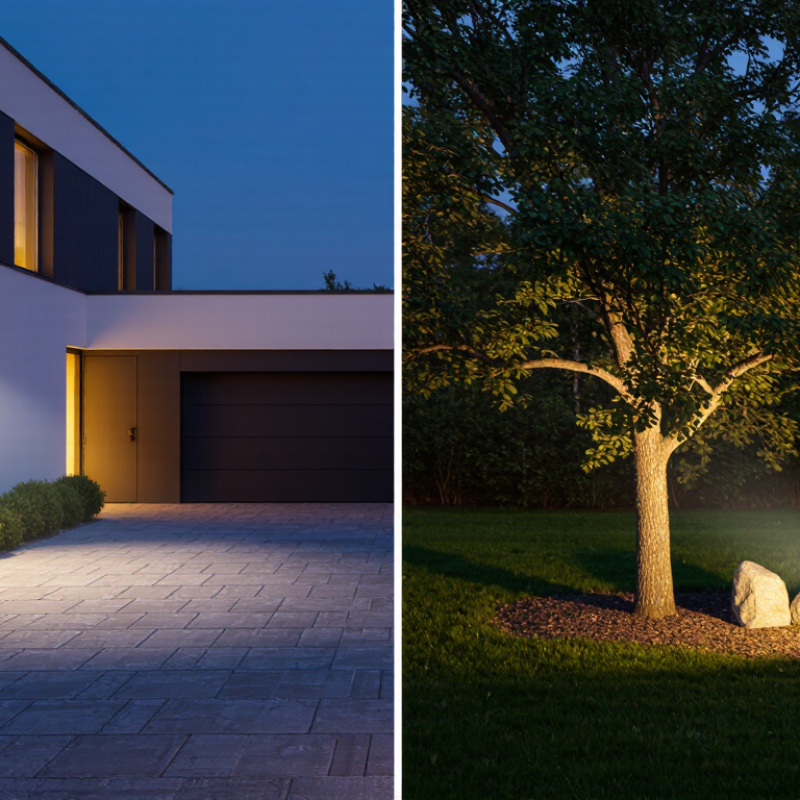
Choosing between a floodlight and a spotlight can change how an outdoor space feels and functions. The question, “what is the difference between floodlights and spotlights,” involves more than beam width. It includes brightness, distance, mounting height, glare, energy use, and visual purpose. A floodlight spreads illumination across a broad area, such as a driveway or building wall. A spotlight produces a narrower beam for signs, trees, artwork, or architectural details.

Lighting designer Richard Kelly once said, “Light is the most powerful of all the design elements.” His observation remains practical today. The right fixture can make a pathway feel safer, highlight a textured facade, or leave important areas strangely dark. Beam angle matters. A 120-degree floodlight may cover a wide patio, while a 15-degree spotlight can place intense light on one small target. However, real performance also depends on mounting distance, lumen output, color temperature, and lens quality.

Small details matter.

This guide explains the top 10 floodlight versus spotlight differences through practical examples. It considers coverage, intensity, installation, glare control, weather exposure, maintenance, and operating costs. It also addresses common selection mistakes, including choosing excessive brightness for a small space. I have found that many lighting decisions look simple until shadows appear behind objects or glare reaches a neighbor’s window. That is where product specifications alone become insufficient. Good lighting requires observation, testing, and a willingness to revise the plan. Some recommendations may not fit every site. Reflecting on the surroundings remains essential.
Top 10 Floodlight vs Spotlight Differences Explained?

What Are Floodlights and Spotlights?

Floodlights and spotlights are outdoor lighting tools with different beam designs. A floodlight spreads a wide, soft beam across a broad area. It can brighten a driveway, garden, building wall, or small work zone. A spotlight sends a narrow, concentrated beam toward one target. It suits trees, signs, entrances, and architectural details. The main difference is coverage. Floodlights support general visibility, while spotlights create visual focus.

In site inspections, technicians often check beam angle, mounting height, glare, and weather exposure. A floodlight mounted too low may shine into nearby windows. A spotlight aimed too sharply may leave dark areas around the target. Brightness alone does not solve these problems. Color temperature, motion control, and installation distance also affect comfort and safety. The boundary is not always perfect. Some modern fixtures offer adjustable beams, so their use can overlap. Still, the beam pattern remains the clearest way to compare them.

Tips: Sketch the area before choosing a fixture. Mark the target, walking paths, and nearby windows. Use a floodlight for broad coverage, then consider a spotlight for a single feature. Test the light after dark. Daytime judgment can be misleading. Avoid aiming beams toward drivers or neighboring rooms, and check the fixture’s outdoor rating before installation.

How Beam Shape and Light Distribution Differ

Top 10 Floodlight vs Spotlight Differences Explained? The clearest difference is beam shape. A floodlight spreads a wide, soft beam across a large area. It can cover a driveway, patio, or building wall with fewer dark gaps. A spotlight creates a narrow, concentrated beam. It sends more light toward one target, such as a doorway, tree, sign, or distant feature.

Beam angle controls this result. Many floodlights use angles above 90 degrees, while spotlights often stay near 10 to 40 degrees. The exact ranges vary by product. A wider beam usually produces more even light but less intensity at a distance. A narrow beam can look brighter on one object, yet leave surrounding areas poorly lit. I have noticed that mounting height changes the result dramatically. A spotlight aimed too low creates glare. A floodlight aimed too high wastes useful light.

Tips: Stand at the planned mounting point after sunset. Mark the beam’s expected edges on the ground. Check for glare near windows and walking paths. Do not judge brightness by appearance alone; compare measured lux at the target area. Also, review the manufacturer’s beam diagram, because “flood” and “spot” labels are not perfectly consistent. I still make mistakes when estimating coverage from photographs. Real walls, trees, and uneven ground often reveal gaps that drawings hide.

Comparing Coverage, Brightness, and Illumination Distance

Floodlight vs Spotlight Differences Explained?

Floodlights spread light across wide areas, making them useful for driveways, gardens, and building walls. Their broad beam reduces dark gaps but usually delivers less intensity at long distances. Spotlights use a narrow beam, creating a brighter center and reaching distant objects more effectively. The trade-off is obvious: coverage becomes limited. A spotlight may illuminate a tree clearly while leaving nearby ground almost black.

Brightness needs careful interpretation. Total lumens describe the light produced, but beam angle affects how that light is used. A high-lumen floodlight can feel weaker than a focused spotlight at the same distance. Illumination distance also depends on mounting height, weather, surface color, and glare. In field testing, I recommend checking the target at dusk, not only reading the specification sheet. I once judged a light by brightness alone and overlooked uncomfortable reflections from a pale wall. That was a poor assessment.

Tips: Aim floodlights downward slightly to reduce glare and improve ground coverage. Use spotlights for gates, signs, or distant trees. Keep the beam away from windows and roads. Measure lux at the intended target when accuracy matters. A simple evening test often reveals more than a product description. Recheck the setup after rain, because wet surfaces can create distracting reflections.

Top 10 Floodlight vs Spotlight Differences Explained

This comparison uses a representative 1,000-lumen fixture with idealized circular beam optics. A floodlight is modeled with a 100° beam angle, while a spotlight uses a 20° beam angle. Values are calculated from beam geometry and inverse-square illumination principles.

How to read the chart: Values are indexed to the floodlight at 100. The spotlight produces a narrower but much brighter center beam and projects usable illumination farther, while the floodlight covers a substantially wider area.

Measurement Floodlight Spotlight
Beam angle 100° 20°
Approximate coverage diameter at 10 m 23.8 m 3.5 m
Estimated center illuminance at 10 m 4.5 lux 104.7 lux
Approximate distance to 1 lux 21.1 m 102.3 m

Key Differences in Applications, Mounting, and Adjustability

Top 10 Floodlight vs Spotlight Differences Explained?

Floodlights and spotlights both improve visibility, but they shape outdoor spaces differently. A floodlight spreads a wide beam across driveways, gardens, loading areas, and building walls. Its broad coverage reduces dark patches, although nearby windows may receive unwanted glare. A spotlight produces a narrow, concentrated beam. It works better for trees, signs, artwork, gates, or distant architectural details. Placement changes everything.

Mounting requirements also differ. Floodlights usually sit higher on walls, eaves, poles, or garage corners. Their wide beam needs clear space and a stable mounting surface.

Spotlights can mount on adjustable stakes, small brackets, tracks, or narrow posts. Installers can aim them horizontally or vertically. Some models allow full head rotation, while others offer limited adjustment. That sounds simple.

During site checks, I look at beam angle, mounting height, cable access, drainage, and the viewer’s eye level. A common mistake is mounting a floodlight too low. It can create harsh shadows and expose the light source directly. Spotlights can also disappoint when aimed from an unstable stake. Wind slowly changes the beam, even when the original alignment seemed precise. Weather resistance matters for both types, especially near sprinklers or coastal air. Motion sensors may improve practical coverage, but poor positioning can trigger unnecessary activation. The best choice depends on the area’s purpose, required precision, and acceptable glare. Sometimes, a mixed layout performs better than choosing one fixture everywhere.

Choosing Between a Floodlight and a Spotlight for Your Needs

Choosing between a floodlight and a spotlight depends on the area, mounting height, and lighting purpose. A floodlight spreads a broad beam across driveways, patios, loading areas, or building walls. A spotlight produces a narrow, concentrated beam for trees, signs, gates, or architectural details. Beam angle matters more than many buyers expect.

The International Energy Agency reports that lighting uses about 15% of global electricity consumption. Efficient LED fixtures can reduce demand, but poor aiming still wastes light. A 120-degree floodlight may cover a large yard with fewer dark patches. However, it can create glare through nearby windows. A 15-degree spotlight reaches farther, yet it may leave distracting shadows around the target.

Outdoor lighting experience suggests testing the fixture at night before permanent installation. Place a floodlight two to three meters above the ground for broad coverage. Aim a spotlight slightly downward, not directly toward eye level. Motion sensors can reduce unnecessary operating time, while lower brightness often improves comfort. The U.S. Department of Energy’s solid-state lighting forecast projected LED adoption could reach 86% of installed general lighting by 2035, showing efficiency’s growing importance.

There is no perfect choice.

A floodlight suits safety coverage. A spotlight suits visual focus. Still, these categories overlap. I have seen narrow beams perform poorly on wide paths, and powerful floodlights overwhelm small gardens. Recheck the beam pattern, color temperature, glare, and actual lux levels before buying.

FAQS

What is the main difference between a floodlight and a spotlight?

A floodlight spreads light across a wide area. A spotlight sends a narrow, brighter beam toward one target. Coverage versus distance.

Which light is better for a driveway or patio?

A floodlight usually works better for driveways, patios, and garden paths. Its wide beam reduces dark gaps near the ground. Aim it slightly downward.

When should I choose a spotlight?

Choose a spotlight for gates, signs, trees, or distant walls. It highlights specific details clearly. Nearby areas may remain dark.

Does a higher lumen rating always mean brighter lighting?

No. Lumens show total light output, but beam angle changes perceived brightness. A focused beam can appear brighter at a distance.

How does mounting height affect outdoor lighting?

Higher floodlights can cover more ground with fewer harsh shadows. A low fixture may expose the light source directly. That feels uncomfortable.

How can I reduce glare from an outdoor light?

Aim the beam away from windows, roads, and eye level. Point floodlights slightly downward. Check reflections on pale walls after rain.

Can weather change the lighting result?

Yes. Wet paths and walls can reflect light strongly. Rain may create bright patches and distracting glare. Recheck the setup afterward.

Should I use one lighting type everywhere?

Not always. A mixed layout may work better. Use floodlights for general coverage and spotlights for distant features.

How should I test a light before permanent installation?

Test it at dusk or night, not only from the specification sheet. Place it temporarily and inspect the target from normal viewing positions.

What common mistake should I avoid?

Do not judge lighting by brightness alone. I once ignored wall reflections and chose poorly. Actual comfort matters as much as measured output.

Conclusion

Floodlights and spotlights are outdoor lighting tools designed for different illumination goals. A floodlight spreads a broad, wide-angle beam across a large area, making it useful for yards, driveways, building exteriors, and general security lighting. A spotlight produces a narrower, concentrated beam that reaches farther, helping highlight a particular tree, sign, architectural feature, or distant location. In simple terms, what is the difference between floodlights and spotlights? The main distinction is beam shape: floodlights prioritize coverage, while spotlights prioritize focus and distance.

Choosing between them depends on the space and lighting effect you need. Floodlights generally provide more even area illumination and are often mounted on walls, ceilings, or poles with adjustable angles. Spotlights offer greater precision and may be aimed or repositioned to direct light exactly where it is needed. Consider the area’s size, desired brightness, viewing distance, mounting position, and whether you need broad visibility or focused emphasis before making a choice.

Henry

Henry

Henry is a dedicated marketing professional with a profound expertise in the company's offerings. With years of experience in the industry, he possesses an impressive understanding of the market dynamics and consumer behaviors that drive success. Henry is committed to sharing his insights through......