Understanding how to calculate lumens needed for a workspace is crucial for effective lighting design. According to lighting expert John Smith, "The right lumens can transform productivity and comfort in any workspace." Proper lumens help to create an environment that boosts focus and enhances overall well-being.
In organizing a workspace, consider both functionality and aesthetics. Bright lighting may increase alertness, but it can also cause eye strain. Balancing lumens to suit various activities is essential. An area designed for detailed work requires more light compared to spaces for casual tasks.
It's clear that calculating the appropriate lumens involves more than just numbers. It requires an understanding of the specific needs of the space. Reflect on how different lighting levels affect your own productivity. Lighting dimensions vary between tasks, and finding the right fit can be a challenge.
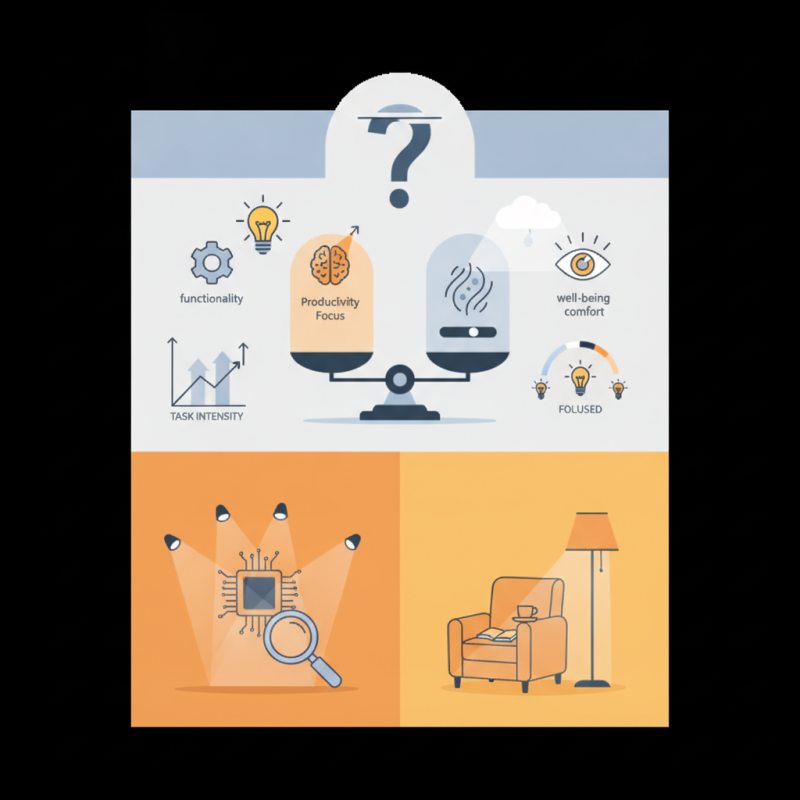
Understanding lumens is crucial for effective workspace lighting. Lumens measure the total amount of visible light emitted by a source. According to the Illuminating Engineering Society, a typical office space requires 300 to 500 lumens per square meter for comfortable working conditions. This range promotes productivity without causing eye strain.
Different tasks require different lumen levels. For example, intricate tasks like drafting may need up to 750 lumens, while general areas can function well with about 250 lumens. Poor lighting can lead to mistakes. Studies suggest that inadequate lighting can decrease productivity by up to 20%. This highlights the importance of proper lumen calculation.
Consider personal and team needs in various workspaces. Spaces divided for individual use may need fewer lumens than collaborative areas. Moreover, ceiling height, wall color, and the presence of natural light also influence overall lighting effectiveness. Taking these factors into account helps create an optimal environment. Adjustments based on these aspects can make a significant difference in workplace comfort and efficiency.
When assessing the size and functionality of your workspace, it’s crucial to consider how much light you need. According to the Illuminating Engineering Society, a general guideline is to use about 100 to 200 lumens per square meter for office tasks. For creative tasks, you might require more, up to 300 lumens. Measuring your workspace accurately helps in determining the right amount of lumens.
Consider the layout and usage of your area. Open spaces require more illumination than smaller, enclosed offices. The colors of your walls can also impact brightness. Lighter colors reflect light better, while darker ones absorb it. A study by the National Research Council states that inadequate lighting can decrease productivity by up to 30%.
Tip: Use layered lighting—ambient, task, and accent. This ensures a well-lit environment while reducing harsh shadows.
Also, remember to assess your age and the task’s visual demand. As people age, they may need more light for the same tasks. Check local regulations too; minimum lighting levels may vary by region.
Tip: Regularly reassess your lighting. Adjustments might be necessary as your needs change.
Taking these aspects into account can help create an effective workspace. It’s about finding a balance that enhances functionality while maintaining comfort.
| Room Type | Size (sq ft) | Recommended Lumens | Functionality |
|---|---|---|---|
| Home Office | 150 | 3000 | Reading & Writing |
| Corporate Office | 300 | 6000 | Meetings & Collaboration |
| Creative Studio | 250 | 5500 | Design & Art Creation |
| Library Space | 500 | 8000 | Reading & Study |
| Workshop | 400 | 7000 | Crafting & Assembly |
Calculating the total lumens needed for your workspace can seem daunting. However, with a simple formula, you can find a suitable lighting level. A common rule is to aim for about 100 to 150 lumens per square foot in office settings. This number can adjust based on the tasks performed.
Start by determining the square footage of your workspace. Multiply the area by the recommended lumens per square foot. For instance, a 100-square-foot office would need between 10,000 and 15,000 lumens. Keep in mind that factors like wall color and natural light can affect your requirements. Light surfaces reflect more light, while dark colors absorb it.
Evaluating your workspace lighting is essential. Sometimes, the calculated lumens may not meet your practical needs. You might feel that the light is either too harsh or too dim. Measuring the real-world experience helps ensure comfort and productivity. Adjusting light fixtures or adding lamps may be necessary. It’s about finding that balance between ideal numbers and real-life application.
Choosing the right light fixtures for your workspace is crucial in meeting lumens requirements. The brightness required depends on the tasks performed in that area. Offices typically need around 300-500 lumens per square meter. Different activities require different lighting levels, so assessing your workspace is important.
When selecting light fixtures, consider the type of work you do. For reading or detailed tasks, brighter light is essential. Overhead lights can provide general illumination, but task lighting is often necessary. Desk lamps with adjustable brightness can provide focused lighting. Pay attention to the color temperature as well. Warmer light may create a relaxed atmosphere, while cooler light can enhance concentration.
Not all fixtures are equally efficient. Energy-saving options may seem attractive, but their output often falls short. Choosing fixtures that allow you to control brightness can help. Dimming options can be beneficial when you need variability. Sometimes, it might take experimenting with different combinations to find the perfect balance. Monitor how the lighting affects your productivity. Adjust as needed, and don’t hesitate to make changes if something feels off.
Proper lighting is crucial for any workspace. It can enhance focus and productivity. However, the right brightness depends on the tasks and environment. For example, reading and writing require more lumens than general office tasks. Task lighting can help with this.
Adjusting the lighting can have a significant impact. Natural light is ideal, but it's not always available. In low-light conditions, you might need brighter lights. Consider adding desk lamps for specific tasks. These can create contrast and reduce eye strain. Not every workspace will be perfect. Some may need adjustment over time.
Balancing ambient light is also important. Overly bright lights can cause glare. Dimmer switches can help manage this. You may need to experiment with different settings to find what works best. Each workspace is unique; what suits one may not suit another. Fine-tuning your lighting can lead to a better working experience.
: Lumens measure the total amount of visible light emitted by a source.
Typical office spaces require 300 to 500 lumens per square meter for comfort.
Yes, intricate tasks like drafting may require up to 750 lumens for accuracy.
Inadequate lighting can decrease productivity by as much as 20%.
Ceiling height, wall color, and natural light influence overall lighting effectiveness.
Multiply the area in square feet by 100 to 150 lumens per square foot.
Real-world experience may differ; adjustments may be needed for comfort.
Yes, collaborative areas might need more lumens than individual spaces for engagement.
Light surfaces reflect more light, while dark colors absorb it, affecting overall brightness.
Yes, it's about balancing calculated needs and actual comfort levels effectively.
To effectively determine how to calculate lumens needed for a workspace, it is essential to first understand what lumens are and their significance in lighting design. This involves assessing the size and functionality of the workspace, as different areas and tasks require varying levels of illumination. By calculating the total lumens needed, one can establish a baseline for adequate lighting.
Once the lumens requirement is established, selecting appropriate light fixtures becomes crucial to meet these needs. It's also important to consider how to adjust lighting based on different tasks and ambient conditions to ensure optimal visibility and comfort. By following these steps, one can create a well-lit workspace that enhances productivity and well-being.

Silvan Lighting