When your outdoor solar lights go dark after sunset, the cause is often small: a shaded panel, a dirty sensor, or a tired battery. The lights may work perfectly at noon, then fail beside the front steps when you need them most. So, why are my outdoor solar lights not working at night? A careful check can separate a simple setup problem from a part that needs replacing.
Photovoltaic systems expert John Wiles has written about the importance of proper system care. A practical paraphrase of that guidance is: “Keep the panel clean, unshaded, and correctly positioned.” It sounds obvious. But a new planter, a porch overhang, or even a thin layer of dust can reduce the sunlight reaching a small panel. Short winter days and several cloudy afternoons may also leave the battery undercharged. Not every failure means the product is defective.
This guide looks at common reasons China’s best outdoor solar lights may stop working at night, from incorrect switch settings to moisture, battery wear, and placement. You’ll find practical checks, such as wiping the panel with a soft cloth and testing the light away from nearby porch lamps. Those checks are useful, but they are not a substitute for the manufacturer’s instructions. Solar lights vary, and one detail is easy to miss: a light can seem “broken” simply because it has not received enough direct sun. Start with the basics, then decide whether repair or replacement makes sense.
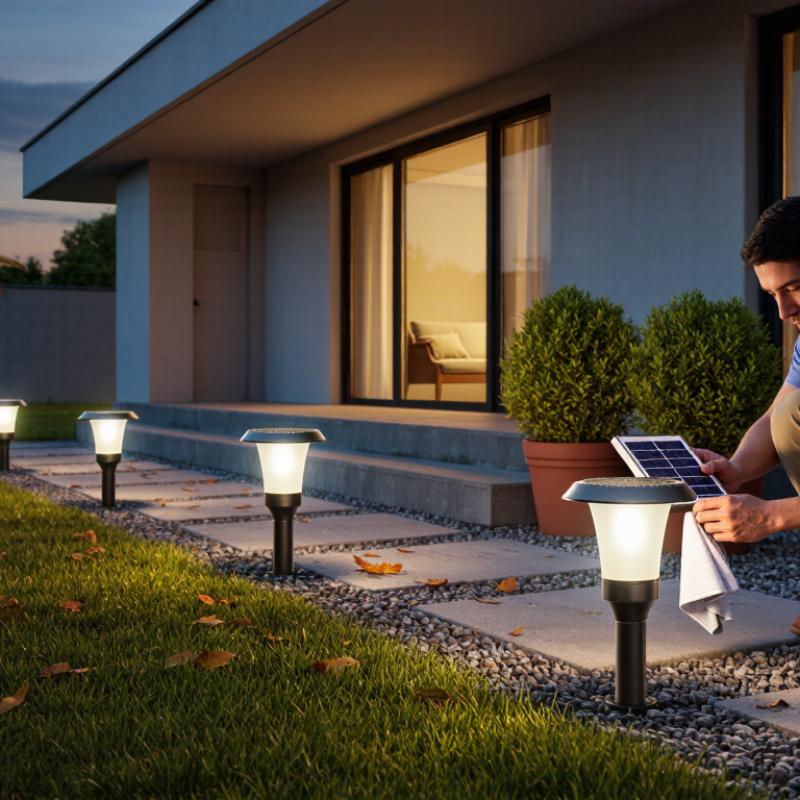
Outdoor solar lights collect energy through a photovoltaic panel. Sunlight—not warmth—creates electrical current in the panel’s cells. A charge controller directs that current into a rechargeable battery and helps prevent overcharging. After dusk, a light sensor switches on the LED, which draws power from the stored energy. The system is small, so even a few hours of shade can matter.
NREL’s 2023 Best Research-Cell Efficiency Chart reports a 27.1% efficiency record for crystalline-silicon cells under laboratory conditions. That figure is not the expected output of a small garden-light panel; real performance depends on panel size, angle, temperature, and available sunlight. Cloudy afternoons, leaves, dust, or a nearby wall can reduce charging. The battery also loses capacity as it ages. A little inconvenient, but normal.
Tips: Place the panel where it receives several hours of direct daylight, and wipe dust from its surface. Check that nearby porch lights do not shine on the sensor and keep the battery contacts dry. If the light fades after a short time, compare its runtime after a bright day with its runtime after an overcast one. That simple test can help separate poor charging from a tired battery.
Outdoor solar lights can stop working at night even when their panels look fine. Often, the battery simply did not receive enough direct sunlight during the day. A porch roof, tree branch, or winter cloud cover can reduce charging time. Even a narrow shadow across the panel may matter.
Start with the simple checks. Wipe away dust, pollen, and dried water spots with a soft, damp cloth. Make sure the panel faces open sky and gets several hours of daylight. Then check the switch; some lights have an off setting or a timer that is easy to overlook. Small details matter. If the light flickers briefly, the battery may be weak or poorly charged, but that symptom alone does not prove the battery has failed.
Temperature and moisture can also affect performance. Cold nights may reduce battery output, while water inside the housing can damage electrical connections. Let a wet light dry before testing it again. If it still fails after sunny days and basic checks, the rechargeable battery may have reached the end of its useful life. Replacing parts too quickly is tempting. I would check the panel, switch, and battery condition first, while remembering that some inexpensive units are difficult to repair.
China Best Outdoor Solar Lights Not Working at Night?
When outdoor solar lights stay dark, check the panel before replacing anything. Dust, pollen, or a fallen leaf can block charging. Wipe the panel with a soft, damp cloth, then place the light where it gets several hours of direct sunlight. Shade from a fence can matter more than expected. Also check that the switch is on and any shipping tab has been removed. A clean panel does not always solve the problem, so avoid assuming it is the only cause.
Next, inspect the battery and light sensor. If the battery is replaceable, look for corrosion, a loose connection, or the wrong polarity. Use a compatible rechargeable battery of the type specified for the light; ordinary disposable batteries may not be suitable. To test the sensor, switch the light on and cover the panel after sunset, or in a dark room. If it turns on, the sensor is likely responding. Bright porch lighting nearby can sometimes keep it off.
Tips: Charge the light in direct sun for a full day before testing. Keep the panel uncovered and dry. If it still fails, test with a known-compatible battery, if possible. These checks can narrow down the fault, but they may not reveal a damaged internal component. Don’t rush the diagnosis.
When outdoor solar lights stop working at night, start with the simplest checks. Confirm the switch is on; some models have a small switch beneath the housing. Cover the solar panel during daylight, then wait briefly to see whether the lamp turns on. This quick test can reveal a setting issue. Not a full diagnosis.
Next, move the light where the panel receives several hours of direct sunlight. Shade from a fence, roof, or tree can leave the battery undercharged, even on a bright day. Wipe the panel with a soft, damp cloth and let it dry. Check for leaves, dust, or cloudy residue. It is easy to blame the battery too soon; I’d check the light’s position first. One overlooked branch can make a noticeable difference.
If the light still fails, switch it off and inspect the battery compartment, if the unit is designed to open. Look for loose connections or corrosion, and replace rechargeable batteries only with a compatible type. Keep the compartment dry. Also check for cracked covers or water inside; stop using a damaged unit and follow its care instructions. After adjustments, let the battery charge through a full sunny day before judging the result. Cloudy weather can distort the test.
A solar light that stays dark after sunset does not always need replacing. Check after sunset. Move it away from porch lamps, then inspect the panel for dust, leaves, or a new patch of shade. Wipe the surface with a soft, damp cloth and let it dry. Also check the switch; some lights have one beneath the casing, where it is easy to miss. If the light works after these checks, the panel or switch may have been the issue.
If the panel gets several hours of direct sun but the light fades quickly, the rechargeable battery may be worn. A battery that is swollen, leaking, or unusually hot should not be reused. Replace it only with the type and size specified for the fixture, and keep the contacts dry. A little corrosion can sometimes be cleaned gently with a dry cloth, but damaged contacts may need professional attention. That detail is easy to overlook.
Consider replacing the whole light when its panel is cracked, the housing lets in water, or the wiring is damaged. Many small outdoor lights have sealed LED units, so replacing the LED alone may not be practical. Test one change at a time and observe the light for a full evening. Results can vary with weather and season; even a healthy unit may shine less after a cloudy day.
| China Best Outdoor Solar Lights Not Working at Night? - When to Repair or Replace a Solar Light Component | ||||
|---|---|---|---|---|
| Component | Common Nighttime Symptom | What to Check | Repair or Replace When | Typical Service-Life Guidance |
| Solar panel | The light is dim, runs briefly, or does not turn on after cloudy days. | Remove dirt, leaves, or snow; check for shade and confirm the panel receives several hours of direct sunlight. Inspect for cracks or water ingress. | Clean or reposition the panel if output improves. Replace a cracked, delaminated, or persistently low-output panel if it can be replaced separately. | Often several years; actual life depends on UV exposure, weather, and panel construction. |
| Rechargeable battery | The light turns on but goes out early, or stays dim despite a clean panel and sunny charging conditions. | Check that the battery is seated correctly and that its type and voltage match the light’s specifications. Look for corrosion, swelling, or leakage. | Replace a rechargeable battery that no longer holds enough charge. Do not use a swollen or leaking battery; follow local battery-disposal guidance. | Commonly about 1–3 years for NiMH and about 2–5 years for lithium-ion, with wide variation from temperature and charge cycles. |
| Light sensor or control circuit | The light remains off in darkness or turns on during the day. | Make sure nearby lighting is not shining on the sensor. Clean the sensor window and check the power switch and operating mode. | Correct placement or settings first. Replace the sensor or control module if it still fails in a dark test and the wiring is intact. | No dependable universal interval; replace based on confirmed failure, corrosion, or water damage. |
| LEDs | The light is noticeably dim, flickers, or has one or more dark sections. | Check for loose connections, moisture, and corrosion. Compare brightness after the battery has been fully charged. | Repair a loose connection if safe and practical. Replace the LED board or fixture if LEDs are damaged or the board is sealed and non-serviceable. | LEDs can last many years, but heat, moisture, and poor connections can shorten service life. |
| Wiring and connectors | Intermittent operation, flickering, or failure after rain or movement. | Inspect accessible connectors for looseness, corrosion, frayed insulation, and water entry. Disconnect power before handling wiring. | Reconnect or replace a damaged, accessible connector. Replace the affected assembly if corrosion has spread or wiring is sealed and unsafe to repair. | Condition-based; inspect after damage, water ingress, or repeated interruptions. |
| Housing and seals | Water droplets inside the fixture, corrosion, or repeated failures after wet weather. | Look for cracked covers, loose seals, blocked drainage, and moisture around the battery compartment. | Replace a failed gasket or cover if the part is available and the enclosure can be resealed correctly. Replace the fixture if water has damaged several components. | Depends on weather exposure and enclosure quality; inspect periodically for cracks and seal deterioration. |
Note: Service-life figures are general estimates, not guarantees. Test the light after a full day of charging in direct sunlight, and check the manufacturer’s specifications for the correct battery type and replacement procedure.
Its battery may not have received enough direct sunlight. A porch roof, tree branch, or cloudy winter day can reduce charging.
Wipe it with a soft, damp cloth. Remove dust, pollen, and dried water spots gently.
Give the panel several hours of direct daylight. A narrow shadow or nearby fence can reduce charging more than expected.
Make sure the switch is on. Check for a timer or an unremoved shipping tab, too.
Turn the light on, then cover its panel after sunset or in a dark room. If it lights up, the sensor is likely responding.
Yes. Bright porch lighting may keep the solar light off. Try testing it away from that light.
Look for corrosion, loose connections, and incorrect polarity. Use a compatible rechargeable battery. I might be overlooking a hidden fault.
Charge it in direct sun for a full day, then test it again. If it remains dark, an internal part may be damaged, or the battery may be worn out. Some units are difficult to repair.
Outdoor solar lights collect energy through a photovoltaic panel during daylight and store it in a rechargeable battery for use after dark. If they stop working at night, the cause may be limited sunlight, a dirty or shaded panel, a weak or depleted battery, an incorrectly positioned light sensor, or a simple switch or connection issue. Understanding how these parts work together can make it easier to identify why are my outdoor solar lights not working at night and choose the right fix.
Start by cleaning the panel, checking that it receives several hours of direct sunlight, and making sure the light is switched on and unobstructed. Then inspect the battery compartment and connections for poor contact, corrosion, or signs of wear. Test the light sensor by covering it after dusk or in a dark room. If the light still fails, try a full day of charging and check the manufacturer’s care instructions. Repair or replace a component when it is visibly damaged or no longer holds a charge; replacing the whole light may be more practical if several parts have failed.

Silvan Lighting