Choosing the right lighting for nighttime reading can significantly impact your experience. Studies suggest that inadequate light can lead to eye strain and fatigue. The American Optometric Association emphasizes that proper lighting is essential for comfortable reading. So, what type of lighting is best for reading at night?
Soft, warm light is typically recommended. Research indicates that warm light promotes relaxation and improves focus. A 2018 report from the Lighting Research Center highlights that colors with a lower color temperature can enhance reading comfort. LED bulbs with adjustable brightness are also gaining popularity. They allow readers to customize their lighting based on individual preferences. However, not all lighting options are created equal.
Many readers overlook the importance of positioning. A light source should illuminate the page without causing glare. A table lamp with a shade can help diffuse light effectively. Still, it’s crucial to recognize that personal preferences play a role. Some may prefer brighter, cooler tones while others lean toward softer hues. This subject merits reflection as we seek the ideal reading environment each night.
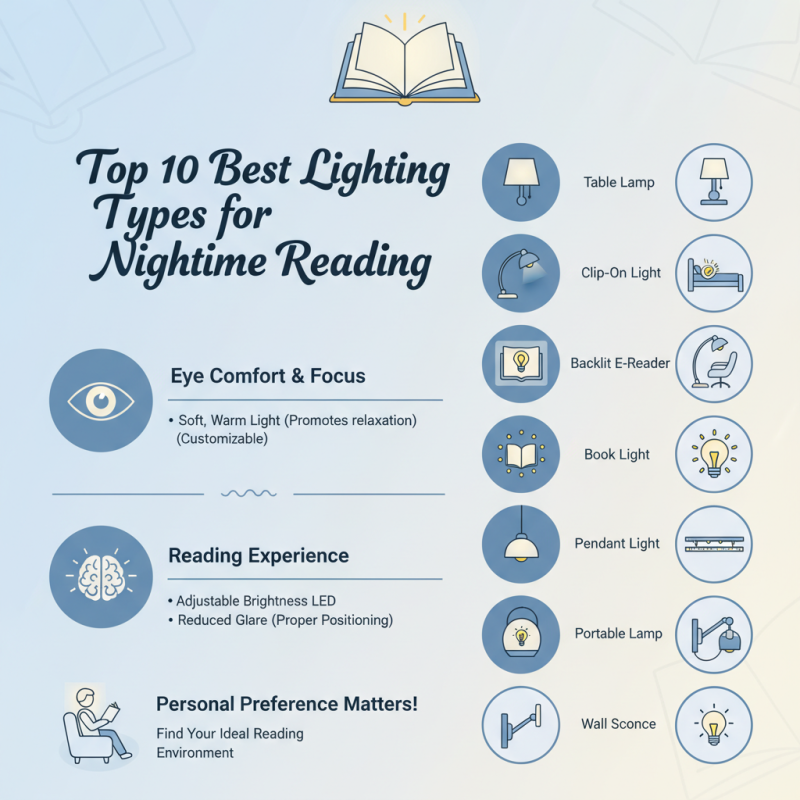
Adequate lighting is essential for nighttime reading comfort. Poor lighting can lead to eye strain, headaches, and decreased reading enjoyment. A study by the American Optometric Association highlights that 50-60% of adults experience discomfort when reading in low light. Good lighting conditions enhance focus and comprehension, making reading a more pleasurable activity.
Different types of lighting can impact your reading experience. Soft white LED bulbs can mimic natural light. They reduce glare and offer warmth. A report from the National Sleep Foundation indicates that blue light, commonly found in bright LEDs, may disrupt sleep patterns. Therefore, avoiding harsh or overly bright lighting is crucial. Dimmers and adjustable lamps allow you to create a cozy reading nook. It’s important to consider the light's placement as well; overhead lighting may not suffice for close-up reading.
Reflecting on personal habits can lead to better choices. Many people neglect their lighting setups, opting for convenience over quality. Creating a dedicated reading space with proper lighting can dramatically improve comfort. Investing in good lighting pays off. The right environment fosters a love for reading, while the wrong one can dissuade it.
When it comes to nighttime reading, the choice of lighting is crucial. LED bulbs are popular for their energy efficiency and longevity. They emit a bright, white light that can enhance visibility. However, this harsh light might cause eye strain during long reading sessions. It’s essential to find the right balance for comfort.
On the other hand, incandescent bulbs provide a warm glow that many find soothing. This type of lighting creates a cozy atmosphere, making it easy to read for hours. Nevertheless, they consume more energy and have a shorter lifespan. Over time, this could lead to more frequent replacements, which is an inconvenient hassle.
Fluorescent lights offer a middle ground. They are more efficient than incandescent bulbs but softer than LEDs. Yet, they can flicker and cause distractions. Each lighting type has its strengths and weaknesses, and individual preferences play a significant role in creating the best reading environment. Finding the right light might take some trial and error.
When it comes to nighttime reading, the right lighting can make a significant difference.
Research indicates that the optimal color temperature for reading in the dark should range from 2700K to 3000K.
This range mimics the warm glow of incandescent bulbs, promoting a cozy atmosphere while minimizing eye strain.
According to the American Academy of Ophthalmology, harsh blue light from conventional LEDs can cause fatigue and discomfort.
Personal experience aligns with these findings. Many readers report better comfort and focus under softer, warmer light.
A study published in the Journal of Vision found that participants exposed to warmer light experienced less glare and discomfort compared to those under cooler light conditions.
This suggests that achieving the right lighting balance is crucial for prolonged reading sessions.
However, not every lighting solution is perfect. Many readers still find it challenging to adjust between different color temperatures.
Bright overhead lighting can be distracting and counterproductive.
While ambient light is essential, it must complement the artwork of words on the page.
A thoughtful approach to lighting can transform your reading experience, but finding that perfect setup takes time and experimentation.
Adjustable brightness plays a crucial role in enhancing the reading experience, especially at night. Studies show that proper lighting can increase focus and comprehension by up to 67%. Dim lighting often makes it hard to concentrate, while overly bright lights can cause discomfort. Finding the right balance is key.
When choosing lighting for nighttime reading, consider options like dimmable LED lamps. They can provide you with various brightness levels suited to your mood and environment. A study from the American Optometric Association suggests that adjustable lighting reduces eye strain. Soft white light is gentler on the eyes, promoting longer reading sessions without fatigue.
**Tips:**
1. Use a lamp with multiple brightness settings. Experiment to see what feels comfortable.
2. Position the light source behind your shoulder. This prevents glare on the pages.
3. Create a cozy environment with warm colors. This can mentally prepare you for reading.
Remember, while aiming for the perfect setup, it’s important to acknowledge that not every lighting type works for everyone. Different environments and individual preferences can lead to varied experiences. Be open to adjusting your setup as needed.
| Rank | Lighting Type | Brightness (Lumens) | Color Temperature (Kelvin) | Adjustability | Best For |
|---|---|---|---|---|---|
| 1 | LED Desk Lamp | 300-500 | 2700-6500 | Yes | General Reading |
| 2 | Adjustable Floor Lamp | 250-700 | 3000-5000 | Yes | Cozy Reading Nook |
| 3 | Table Lamp with Dimmer | 200-600 | 2700-3000 | Yes | Bedside Reading |
| 4 | Clip-On Book Light | 120-300 | 4000-5000 | Yes | Portable Reading |
| 5 | Smart LED Bulbs | 800-1600 | 2700-5000 | Yes | Whole Room Illumination |
| 6 | Rechargeable LED Lantern | 150-450 | 3000-4000 | Yes | Outdoor Reading |
| 7 | Wall Mounted Reading Light | 100-300 | 2700-3500 | Limited | Focused Illumination |
| 8 | Torchiere Lamp | 400-800 | 2700-3000 | Yes | Ambient Light |
| 9 | Book Reading Floor Lamp | 300-600 | 2700-3500 | Yes | Ergonomic Reading |
| 10 | Portable USB Reading Light | 50-150 | 3000-5000 | Yes | Travel Reading |
The quality of light greatly impacts our sleep and reading retention. Bright, harsh lighting can disrupt the body's natural rhythm. Soft, warm light is more conducive to a calm environment. It promotes relaxation, helping the mind to unwind before sleep. This suggests that smart lighting choices may enhance sleep quality.
When reading, dim lighting can strain the eyes. Insufficient light leads to fatigue and decreased concentration. On the other hand, a balanced light level enhances comprehension. This balance allows readers to absorb information better. Using adjustable lighting can provide the perfect ambiance for reading.
Occasionally, one might overlook the color temperature of light. Warmer hues create a cozy nook for relaxation. Cooler tones, however, can keep one alert—beneficial during daytime study. Ultimately, choosing the right lighting type matters. Revisiting the lighting setup might reveal improvements needed for better sleep and reading retention.
: Soft, warm light around 2700K to 3000K is ideal for comfort.
LED lights are bright and energy-efficient but may cause eye strain over time.
Incandescent bulbs provide a warm glow, making them cozy, but they consume more energy.
Fluorescent lights can flicker and be distracting, though they are more efficient than incandescent bulbs.
Soft, warm light helps relax the mind, improving sleep quality, unlike harsh, bright light.
Warmer light reduces glare and improves focus, helping with better information retention.
Finding the right lighting setup often requires trial and error to suit individual preferences.
Many overlook the color temperature, impacting comfort and overall reading experience.
Adjustable lighting helps create the perfect ambiance, improving focus during reading sessions.
Adjusting between different color temperatures can be challenging, disrupting reading flow.
When it comes to nighttime reading, adequate lighting is crucial for comfort and focus. The article explores various lighting solutions, comparing LED, incandescent, and fluorescent options to determine what type of lighting is best for reading at night. Each type has distinct advantages and drawbacks, impacting both eye strain and overall reading experience.
Furthermore, optimal color temperature plays a significant role in reducing eye strain, while adjustable brightness features can enhance concentration. The relationship between lighting and sleep quality is also examined, revealing how proper illumination affects reading retention rates. Ultimately, selecting the appropriate lighting not only improves nighttime reading comfort but also contributes to better sleep and cognitive performance.

Silvan Lighting