Outdoor motion sensor lights have become popular for enhancing security and convenience. However, homeowners often wonder, "why do outdoor motion sensor lights stay on?" Understanding the reasons behind this behavior can help maximize their effectiveness.
These lights are designed to detect movement and illuminate when activated. If they stay on longer than expected, several factors may be at play. Sometimes, the settings might be adjusted incorrectly. Perhaps the sensitivity is too high, causing the lights to trigger at minor disturbances such as rustling leaves.
Weather conditions can also affect performance. Rain or wind may create shadowy movements that trigger the sensors. In some cases, a malfunctioning sensor or wiring issue could lead to lights remaining on unexpectedly. Therefore, maintenance is essential. Homeowners should regularly check their systems to ensure optimal operation. Such oversight not only saves energy but also enhances security measures.
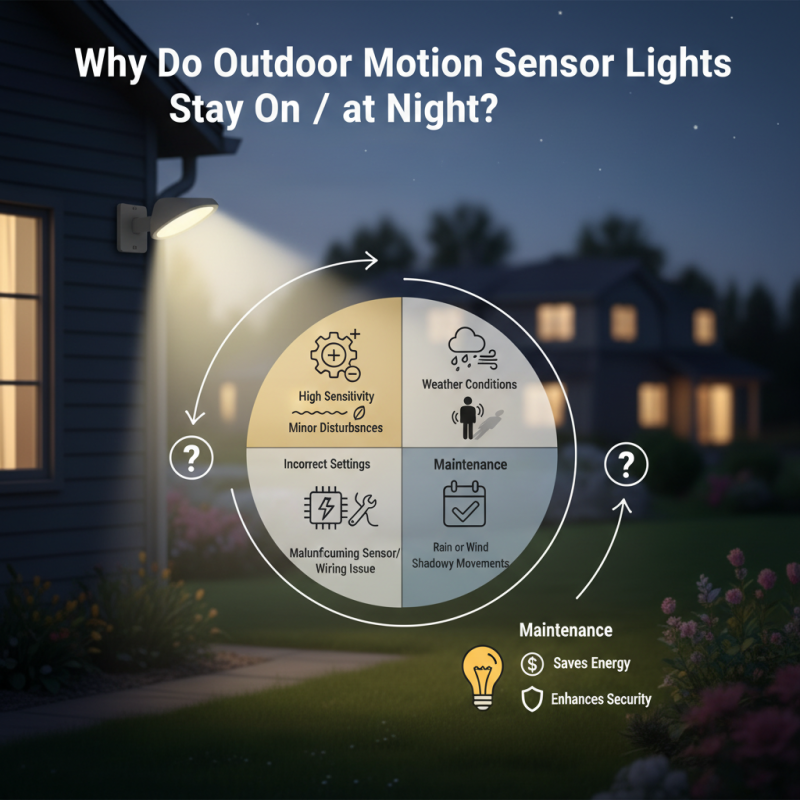
Outdoor motion sensor lights are designed to enhance security and safety around homes. They rely on infrared sensors to detect movement. When someone or something crosses the sensor's path, the light activates, illuminating the area for a set duration. According to industry reports, these lights can reduce crime rates by up to 60%, making them a popular choice for homeowners.
However, there are instances when these lights may stay on at night. Factors such as heat sources, animals, or even trees swaying can trigger the sensor unnecessarily. Many users report frustration with false alarms, which can lead to increased energy consumption. A study from the Illuminating Engineering Society indicates that improperly calibrated motion sensors can cause lights to remain active for extended periods. Adjusting sensitivity settings can help alleviate this issue, but many find this process challenging.
Expert recommendations suggest regular maintenance and positioning of the sensors to minimize false triggers. Sensors should ideally be installed away from heat sources and moving objects. Some experts argue that the reliability of these lights is often compromised by incorrect installation. While they provide significant benefits, users must remain vigilant about their functionality and calibration.
Motion sensors use advanced technology to detect activity, especially at night. They can sense heat and movement, allowing them to react promptly. These sensors typically rely on passive infrared (PIR) technology, which detects changes in temperature. When a warm body, such as a person or an animal, crosses its field of view, the sensor is triggered. This reaction can illuminate the area, providing safety and security.
In outdoor settings, environmental factors can influence the operation of motion sensors. Rain, snow, or wind can affect their accuracy. Trees swaying in the wind may accidentally activate the light. Furthermore, sensor placement is critical. If installed too low or misaligned, they can lead to false alarms. Over time, users may experience frustration due to lights turning on without any clear reason.
Adjusting the sensitivity settings can help fine-tune performance. However, it often requires trial and error. Another challenge is dealing with obstructions like bushes and fences. They can block the sensor’s view, causing inconsistent activation. Finding the right balance can be tricky, yet it is key to a reliable outdoor lighting experience.
Outdoor motion sensor lights are designed to enhance security and convenience. However, there are common reasons why these lights may stay on longer than intended. Understanding these factors helps in managing energy use and ensuring proper function.
One reason is sensitivity settings. Many motion sensors allow users to adjust their sensitivity. A higher sensitivity may cause the light to trigger with even slight movements. A study from the Energy Research Group found that adjusting sensitivity can reduce unnecessary activation by up to 30%. This means understanding your sensor can save energy and money.
Another factor is external disturbances. Animals, passing cars, or even strong winds can trigger these lights. According to a report from the National Institute of Standards and Technology, many homeowners experience false triggers from wildlife. These incidents can lead to lights remaining on for extended periods, wasting energy. Some experts recommend positioning lights and sensors carefully to minimize false activations. Reflecting on these common issues can lead to better handling of outdoor lighting systems.
| Reason | Description | Possible Solutions |
|---|---|---|
| Improper Settings | The sensitivity or duration settings of the sensor may be configured incorrectly, causing it to stay on longer than intended. | Adjust the settings according to the user manual to set the appropriate sensitivity and duration. |
| Faulty Sensor | A malfunctioning sensor may register continuous movement, keeping the light on. | Test the sensor and replace it if necessary to ensure it operates correctly. |
| Environmental Factors | High winds, wildlife, or passing vehicles can trigger the sensor inaccurately, resulting in extended operation. | Position the sensor away from active areas or adjust its sensitivity to minimize false triggers. |
| Wiring Issues | Improper wiring or short circuits may cause the light to remain on unexpectedly. | Check the wiring connections and repair any faults to ensure correct functionality. |
| Power Supply Problems | Inconsistent power supply may lead to erratic behavior of motion sensors. | Inspect the power supply and replace it if necessary to stabilize sensor performance. |
Outdoor motion sensor lights can be incredibly useful for enhancing security. However, their sensitivity settings heavily influence how and when they operate. Various factors, such as environmental disturbances, can cause these lights to behave unexpectedly.
One key factor is the placement of the sensors. Sensors positioned near trees or shrubs may incorrectly register movement caused by wind. Additionally, pets scurrying around may trigger the lights, leading to unnecessary activation. In some cases, lights may remain on too long or turn on too frequently. Fine-tuning the sensitivity can help mitigate these issues.
Temperature fluctuations also play a role. Cold nights may cause the sensor's technology to react differently. Rain or fog can create a similar effect. It is essential to regularly adjust settings based on seasonal changes. This will require observation and patience. Users should not hesitate to experiment with the adjustments until the desired responsiveness is achieved. Sometimes, even minor tweaks can lead to significant improvements.
Outdoor motion sensor lights enhance security and provide convenience. However, sometimes these lights remain on longer than intended, causing frustration. Understanding the potential causes and how to troubleshoot them is essential for effective usage.
One common issue is the sensitivity setting. If adjusted too high, lights may activate with minor movements, such as animals or trees swaying. Experts suggest setting the sensitivity to the lowest effective level to reduce false positives. Regular maintenance is also vital. Dirt on the sensor can impede functionality, leading to unexpected behavior. Cleaning the sensor with a soft cloth can resolve many problems.
Additionally, consider the placement of the lights. If they face a busy street or are too near to vegetation, they may activate unnecessarily. An ideal installation position is approximately 6–10 feet high and directed away from potential obstructions. This minimizes unintended activation while ensuring security.
Adjusting these settings and maintaining your system can enhance durability and performance. Remember, even the best technology requires periodic attention and care to function optimally.
: They enhance security and safety around homes by detecting movement.
They use infrared sensors to detect movement and activate lights.
Factors like heat sources and animals can trigger sensors unnecessarily.
Many experience false alarms, leading to increased energy consumption.
Regular maintenance and adjusting sensitivity settings can help alleviate issues.
Rain, snow, and wind can hinder their accuracy and functionality.
Incorrect placement can lead to false alarms and inconsistent activation.
Fine-tuning may require trial and error, which can be time-consuming.
Bushes and fences can block the view, causing inconsistent activation.
Users must remain vigilant about functionality and calibration of their sensors.
Outdoor motion sensor lights are designed to enhance security and convenience by illuminating areas when movement is detected. Understanding why do outdoor motion sensor lights stay on involves examining how these sensors work at night. Typically, they rely on infrared technology to detect body heat and motion, but certain factors can lead to prolonged operation, such as sensitivity settings, environmental conditions, and unintended triggers from animals or foliage.
Common reasons for extended operation include miscalibration of the sensitivity settings and interference from external stimuli like heavy rain or strong winds. To troubleshoot these issues effectively, users should check their settings, ensure there are no obstructions, and possibly reset the sensor for optimal performance. By addressing these factors, users can manage the functionality of their motion sensor lights to ensure they operate only when necessary.

Silvan Lighting