When discussing outdoor lighting, many people wonder what is the difference between floodlights and spotlights. Both types serve unique purposes and can greatly enhance visibility and security. Understanding their key differences can help individuals make informed choices for their specific needs.
Floodlights provide broad, diffused light. They illuminate large areas, making them ideal for lighting up outdoor spaces like yards, driveways, and sports fields. Spotlights, in contrast, create a focused beam of light. This allows for precise illumination, perfect for highlighting architectural features or illuminating specific objects.
In their applications, floodlights often shine for safety and security. Spotlights are favored for accent lighting and creating dramatic effects. By examining these differences, one can appreciate how each type of light interacts with its environment. This understanding offers practical advantages in both residential and commercial lighting designs.
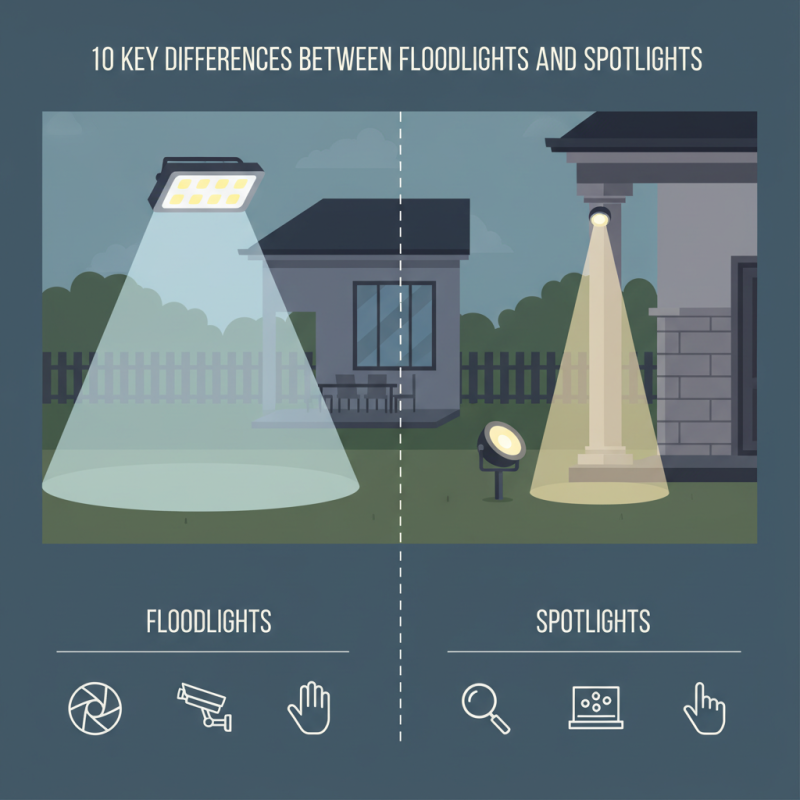
Floodlights and spotlights serve distinct purposes in lighting applications.
Floodlights illuminate large areas evenly, making them ideal for outdoor spaces, sports fields, and security lighting. They disperse light widely, ensuring no corners remain dark.
In contrast, spotlights focus light in a specific direction, creating a concentrated beam. This makes them perfect for highlighting architectural features, art, or landscaping.
When choosing between these two types, consider your specific needs. Floodlights might be overkill in small backyards but essential for expansive areas.
Spotlights can enhance visual appeal but may require careful placement to avoid unwanted shadows.
Tips: Always assess your space before purchasing. Measure the area to determine the appropriate coverage.
Experiment with different angles to achieve the desired effect. Remember, every lighting setup has its flaws.
Sometimes, achieving a perfect balance can be challenging. Don’t hesitate to reconsider your options as you learn what works best in your environment.
Floodlights are distinct due to their broad beam angle. They illuminate large areas evenly. This makes them ideal for outdoor spaces, stadiums, and security lighting. Unlike spotlights, which focus on a narrow area, floodlights provide generalized brightness. They are perfect for lighting up gardens, parking lots, and stages.
One key characteristic of floodlights is their ability to endure harsh weather. Many models are built with durable materials. They often feature weatherproof housing that allows them to function under rain, snow, or extreme heat. This reliability is essential for consistent outdoor lighting.
Tips: When choosing floodlights, consider the lumens produced. Brightness is key to effective illumination. Also, think about the placement. Adjusting angles can help avoid light pollution while maximizing coverage. Always ensure the fixtures are securely mounted, as they may need to withstand strong winds.
Floodlights also have different wattages. Lower wattage options can save energy while still providing ample light. However, some users may feel less brightness is ideal for their requirements. It’s important to assess your actual needs and preferences when selecting the right fixture.
Spotlights are designed for precision. They focus light on a specific area. This unique feature makes them ideal for highlighting objects or creating dramatic effects in a space. For instance, a spotlight can draw attention to artwork in a gallery or illuminate a performer on stage. The beam is narrow, usually adjustable, allowing for versatility in application. This control over focus makes spotlights favorites in theater and photography.
Another distinctive trait is their beam angle. Spotlights typically have a tighter beam angle than floodlights, often ranging from 15 to 45 degrees. This specificity enhances their effectiveness in creating mood and atmosphere. In contrast, floodlights wash an area with light, lacking the fine focus of spotlights. However, spotlights can be a challenge. Adjusting their angle for the perfect effect requires practice and skill. Misalignment can lead to unwanted shadows. It's crucial to experiment with position and intensity to achieve the desired outcome.
When comparing floodlights and spotlights, beam angles play a significant role in determining their applications. Floodlights are designed to produce a wide beam angle, typically ranging from 60 to 120 degrees. This wide dispersal is ideal for illuminating large areas such as sports fields, parking lots, and outdoor venues. The light spreads evenly, ensuring that no corner is left in darkness. You can count on floodlights for security lighting, showcasing architectural features, or providing general illumination.
On the other hand, spotlights have a much narrower beam angle, generally between 15 to 30 degrees. This concentrated beam allows them to highlight specific objects or areas. For instance, you might use spotlights to enhance artwork in galleries or create an intimate ambiance in a dining space. The sharp focus of a spotlight can create dramatic effects, drawing attention precisely where it’s needed. However, this can lead to challenges, such as overexposure of the highlighted area and under-illumination of the surrounding space. It's important to balance the use of both types for optimal lighting design.
Floodlights and spotlights serve different purposes in lighting design. Floodlights emit broad beams of light, making them ideal for large areas. They are often used in outdoor settings like sports fields and parking lots. Their ability to illuminate wide spaces enhances safety and visibility.
Spotlights, on the other hand, focus on narrow beams. They are perfect for highlighting specific features, such as artwork or architectural details. Spotlights create dramatic effects in homes and galleries. The precision of spotlights adds a touch of elegance to any setting.
**Tip:** When choosing lighting for a garden, consider using floodlights for overall illumination. Use spotlights to highlight specific plants or features. This combination balances functionality and aesthetics.
Consider the height and angle of placement for both types of lights. Floodlights installed too high may leave dark spots. Incorrectly positioned spotlights can create glare and discomfort. Understanding these nuances is essential for effective lighting design.
**Tip:** Test different positions before making permanent installations. Small adjustments can significantly impact lighting quality. Remember, effective design is all about balance and focus.
| Dimension | Floodlights | Spotlights |
|---|---|---|
| Light Distribution | Wide beam angle, covering large areas | Narrow beam angle, focused light |
| Common Uses | Outdoor security, sports fields | Theatrical lighting, highlighting artwork |
| Intensity | Lower intensity, broader area | Higher intensity, detailed focus |
| Installation Height | Usually installed higher for wider coverage | Can be installed at varied heights for focus |
| Energy Efficiency | Generally more energy efficient for large areas | Less efficient for vast areas, but effective for small tasks |
| Common Bulb Type | LED, Halogen | LED, Halogen, Incandescent |
| Durability | Designed for repeated outdoor use | Varies based on design, often used indoors |
| Cost | Generally more affordable for larger setups | Can be more expensive due to focused design features |
| Control Options | Less control, often used for general lighting | More control options for specific lighting effects |
| Design Variability | Standardized shapes for broad lighting | Various shapes and sizes for artistic purposes |
: Floodlights illuminate large areas evenly, while spotlights focus light on specific objects or areas.
Use floodlights for expansive spaces like sports fields and security lighting. They cover more ground effectively.
Yes, many floodlights have weatherproof housing, designed to function in rain, snow, and extreme heat.
Beam angle is crucial. Floodlights usually have a wide angle, while spotlights have a narrow beam for focusing light.
Assess the area size, desired brightness in lumens, and secure fixture mounting for outdoor reliability.
Yes, lower wattage floodlights can save energy while providing sufficient brightness for various needs.
Carefully consider placement and angles. Improper positioning can create unwanted shadows and poor lighting balance.
Yes, balancing light from both floodlights and spotlights can be difficult and may require adjustment.
By providing broad illumination, floodlights reduce dark corners, improving visibility for safety in outdoor areas.
Overexposure of highlighted areas can occur, leading to under-illumination of the surrounding space. Adjustments may be needed.
When discussing what is the difference between floodlights and spotlights, it’s essential to understand the fundamental characteristics of each type. Floodlights are designed to cast a wide beam of light, illuminating a larger area and making them ideal for situations like outdoor gatherings or security lighting. In contrast, spotlights produce a narrow beam that focuses light on a specific point, making them suitable for highlighting architectural features or artwork.
The comparison between their beam angles further distinguishes these lighting options, as floodlights typically have a broader beam angle than spotlights. Understanding the unique applications for each type, from floodlights being used in sports fields and outdoor settings to spotlights in theatrical productions and galleries, helps in selecting the right lighting solution for various design needs.

Silvan Lighting