Choosing what type of lighting is best for reading at night involves more than picking the brightest bulb. A comfortable reading setup should reduce glare, harsh shadows, and eye fatigue. In a quiet bedroom, a warm task lamp beside the chair often works better than a strong ceiling light. Aim the beam toward the page, not directly toward your eyes. Keep it gentle.
Dr. George Brainard, a respected photobiologist and lighting researcher, has said, “Light is the most powerful synchronizer of the human circadian system.” His observation explains why evening lighting deserves careful attention. Bright, blue-rich light may feel energizing, but it can also delay the body’s natural preparation for sleep. For many readers, a dimmer light around 2700K to 3000K feels calmer. However, no single setting suits everyone. Some people need stronger illumination because of age, prescription lenses, or small print.
The practical question is not only what type of lighting is best for reading at night. It is also how the light reaches the page. A shaded lamp, adjustable neck, and matte book surface can make a noticeable difference. Try reading for twenty minutes, then notice your eyes and sleepiness. The answer may require adjustment. I would not treat warm light as a perfect solution, either. Poor positioning can still create glare, and dim lighting can encourage squinting. Good nighttime lighting is personal, measured, and easy to refine.
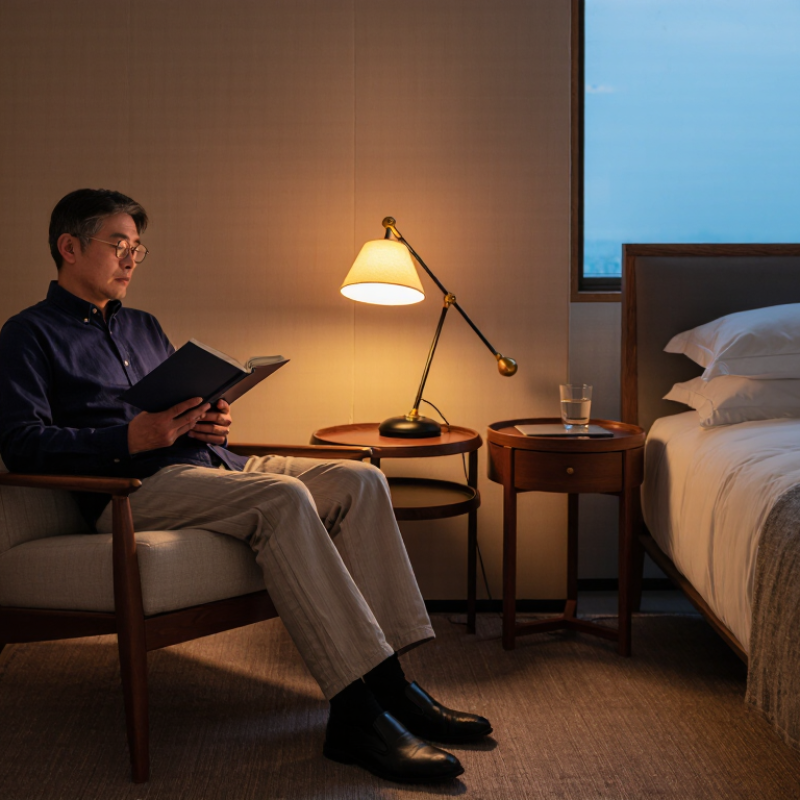
A warm, steady reading light usually works best at night. Aim it at the page, not your eyes. A shade or adjustable lamp can reduce harsh glare. Keep the page evenly lit, with no bright patch beside dark shadows. Around 3000K often feels comfortable, but personal comfort still matters. Some readers prefer slightly warmer light.
Poor lighting does not usually damage healthy eyes permanently, yet it can cause squinting, dry eyes, headaches, and temporary blur. Reading in bed with one small lamp may force your eyes to work harder. Sit close enough to read without leaning forward. Increase the light slightly if letters look gray. Reduce it if the page shines.
Nighttime light can also affect sleep. Blue-rich, bright light from a screen may suppress melatonin and delay sleepiness, especially near bedtime. Paper reading under a dim, warm lamp is generally gentler. A screen’s brightness should match the room, rather than glowing like a small window. I once assumed dimmer always meant better, but very low contrast can be tiring too. Stop if your eyes ache, and arrange an eye examination for repeated symptoms.
At night, the best reading light makes words clear without turning the page into a bright screen. Brightness matters, but more is not always better. I prefer an adjustable light because paper and screens reflect light differently. A warm-to-neutral color range, around 2700K to 4000K, often feels comfortable in a quiet room. The right setting depends on your eyes, print size, and surrounding darkness. Keep it personal.
Position is equally important. Place the lamp slightly behind and beside your reading hand. This reduces shadows across the page. A shade or diffuser can soften harsh points of light. Check for glare by tilting the book slowly. If a white patch moves across the text, change the angle or lower the brightness. Avoid an exposed bulb. A stable base also prevents small nighttime accidents. I once ignored this detail and kept adjusting the light every few minutes.
Look for even illumination, low visible flicker, and suitable color rendering. A color-rendering index above 80 can make paper appear more natural, though it is not the only quality measure. For long sessions, strong contrast between bright text and a dark room may feel tiring. A softer pool of light often works better. Still, no setting suits everyone. My preference changes after several pages, especially when I am tired. Test the light with your actual book for ten minutes. Read a page. Notice glare, shadows, heat, and neck posture. Then adjust one factor at a time.
Warm, cool, and adjustable lights affect nighttime reading differently. Warm light around 2700–3000K usually feels softer and less stimulating. It suits quiet reading beside a bed. Cool light around 4000–5000K can make small print appear clearer. Cool light feels crisp. However, brightness and exposure time matter more than color temperature alone.
A 2015 study in Proceedings of the National Academy of Sciences compared illuminated e-readers with printed books. After five evening sessions, e-reader users showed melatonin suppression of about 55% and a circadian delay exceeding 1.5 hours. The participants also felt less alert the next morning. This does not mean every cool lamp causes the same effect. Light intensity, distance, and personal sensitivity change the result. The IES Lighting Handbook commonly places reading tasks near 300–500 lux, depending on print size and visual needs. A dimmable lamp can reach that range without flooding the whole room.
For practical use, adjustable lighting offers the most control. Set a warm tone near 3000K after sunset, then reduce brightness when your eyes feel tired. Keep the beam on the page, not directly in your eyes. A desk light positioned 30–45 centimetres away can reduce harsh shadows, though room layout may require compromise. My own preference would not be universal. Some readers need cooler light for contrast, especially with small text. Color temperature is not a magic switch. A simple light meter, or careful adjustment over several nights, can reveal what actually works.
Comparing warm, cool, and adjustable light sources by typical correlated color temperature.
Warm light around 2700 K is generally the most comfortable choice for nighttime reading because it contains less short-wavelength blue light. Cool light around 5000 K can appear brighter and more energizing, but may feel harsh late in the evening. Adjustable lighting is the most flexible option, allowing the color temperature to be lowered at night while maintaining approximately 300–500 lux for comfortable reading.
A well-positioned reading lamp should illuminate the page without shining into your eyes. Place it slightly behind your shoulder, about 30–45 centimeters from the book. For right-handed readers, the left side often works best because your hand creates fewer shadows. Left-handed readers may prefer the opposite side. An adjustable neck helps you fine-tune the angle. Aim the light toward the page, not directly across your face.
Brightness matters more than raw intensity. Start with a moderate setting, then increase it until the words look crisp without appearing harsh. A warm or neutral-white bulb can feel comfortable at night, while very cool light may seem stimulating.
The ideal level depends on print size, eyesight, and room darkness. A small amount of surrounding light can reduce the contrast between the bright page and dark walls. Complete darkness is rarely comfortable.
Tips: Use a matte lampshade or diffuser to soften reflections. Keep glossy pages tilted slightly away from the lamp. Check for glare by moving your head slowly. If bright streaks follow your movement, adjust the lamp or book. I once blamed a weak bulb for eye strain, but the real problem was a polished table reflecting light upward. There is no perfect setup. Your eyes, furniture, and reading habits may require small changes each evening. Ensure the lamp remains stable, and avoid placing it where a cable can catch your arm.
What Type of Lighting Is Best for Reading at Night?
Safe reading lighting depends on age, vision, and the reading environment. A warm, steady light usually feels comfortable at night. Choose a lamp that illuminates the page without shining directly into your eyes. The light should come from beside or slightly behind your shoulder. This reduces glare on glossy paper and screens. Keep the page about 40 centimeters from your face. Avoid reading in complete darkness, because the sharp contrast may cause discomfort and faster fatigue. Take a brief distance break every 20 minutes.
Children need special care. Their reading light should cover the whole page, not create a bright spot in one corner. A flexible lamp can help, but loose cords should remain out of reach. Older adults often need more light because the eyes admit less light with age. However, brighter is not always better. Strong glare can make words harder to see, especially with cataracts or dry eyes. A larger font and matte paper may help more than adding another lamp.
For people with headaches or light sensitivity, adjust the angle before increasing brightness. A dimmer can provide control, although settings may not feel identical across rooms. I have found that a comfortable lamp is often less effective when placed too far away. That detail is easy to miss. Eye strain can also come from poor posture, uncorrected vision, or reading too long. Persistent pain, blurred vision, or unusual light sensitivity deserves professional eye care. No lighting setup solves every problem.
| Reader or Need | Recommended Light on the Page | Suggested Color Temperature | Best Lighting Setup | Safety and Comfort Considerations |
|---|---|---|---|---|
| Children and Young Readers | 300–500 lux measured at the reading surface | 2700–3500 K | A shaded, adjustable lamp positioned beside or slightly behind the reader so the hand does not cast a shadow on the page. | Avoid exposed bright bulbs, flicker, and strong reflections. Keep cords and hot lamps out of reach. |
| Teens and Adults | 300–500 lux for comfortable close reading | 2700–4000 K | Use even, diffused task lighting with additional low-level ambient light to reduce the contrast between the page and the surrounding room. | The light should illuminate the page without shining directly into the eyes or producing glare from glossy paper. |
| Older Adults | 500–750 lux, adjusted for comfort and visual ability | 3000–4000 K | Choose a larger, diffuse light source with good color rendering and precise direction toward the page. | Older eyes often need more light and are more sensitive to glare. Increase brightness gradually rather than using a harsh, bare source. |
| Light-Sensitive Readers | 200–400 lux, starting low and increasing only as needed | 2200–3000 K | Use dimmable, indirect, diffused lighting and place the lamp outside the direct field of view. | Reduce glare, reflections, and rapid brightness changes. Individual conditions such as migraine or eye disease may require professional advice. |
| Reading Before Sleep | 100–300 lux if comfortable for the reader | 2200–3000 K | Use the lowest comfortable brightness, warm light, and a focused beam aimed only at the book. | Dim, warm lighting is less stimulating for many people than bright, cool lighting. Avoid reading in complete darkness if the contrast causes eye discomfort. |
| Reading on an E-Reader or Tablet | Approximately 100–300 lux of comfortable surrounding light | 2700–3500 K for the room | Keep screen brightness close to the surrounding room brightness and use a matte screen or anti-glare position when possible. | Reduce reflections, increase text size, and avoid holding the screen very close. A device with its own light does not require a bright lamp aimed at the display. |
| Readers Who Wear Glasses | 300–500 lux, adjusted for glare and prescription needs | 2700–4000 K | Position the light at an angle to the page and slightly behind the shoulder; use a shade or diffuser. | Anti-reflective lenses and controlled lamp placement can reduce reflections. Clean lenses also improve contrast and comfort. |
| Measurement note: Lux values refer to the light reaching the reading surface, not the lamp's wattage or lumen rating. Keep the light source out of direct view, avoid visible flicker, and adjust brightness to prevent squinting, glare, or eye discomfort. Good lighting can improve comfort, but it does not prevent or correct refractive errors. | ||||
Place it slightly behind your shoulder, about 30–45 centimeters from the book. Aim the light at the page, not your face. This position can reduce shadows and glare.
Right-handed readers often prefer the left side. Left-handed readers may prefer the right side. Your writing hand then creates fewer shadows.
Start with moderate brightness. Increase it until the words look crisp, not harsh. Print size, eyesight, and room darkness affect the ideal setting.
Warm or neutral-white light often feels comfortable at night. Very cool light may feel stimulating. Personal comfort still matters more than a fixed color rule.
Use a matte shade or diffuser. Tilt glossy pages slightly away from the lamp. Move your head slowly and watch for bright streaks.
Avoid complete darkness. A small amount of surrounding light reduces strong contrast between the page and walls. Your eyes may feel less tired.
Children need light covering the whole page, without loose cords nearby. Older adults may need more light, but strong glare can still obscure words. Larger text may help more.
Adjust the lamp angle before increasing brightness. Keep the page roughly 40 centimeters from your face. Take a distance break every 20 minutes. Posture and uncorrected vision may also matter.
Change the lamp, book, or chair slightly each evening. I once blamed a weak bulb, but a polished table caused the reflection. There is no perfect arrangement. Persistent pain or blurred vision deserves professional eye care.
Choosing what type of lighting is best for reading at night involves balancing visual comfort, sleep quality, and personal needs. A suitable reading light should provide steady, focused illumination without creating harsh shadows or glare. Warm light is often comfortable in the evening and may be less disruptive to the body’s natural sleep rhythm, while cooler light can improve alertness but may feel too stimulating before bedtime. Adjustable lighting is useful because readers can change the color and brightness according to the time, task, and environment.
Lamp placement and brightness are equally important. Position the light slightly behind and to the side of the reader, directing it onto the page rather than into the eyes. The illumination should be bright enough to read clearly but not so intense that it causes squinting, headaches, or eye fatigue. Children, older adults, and people with sensitive vision may need more even, adjustable lighting and extra glare control. In every case, comfortable brightness, reduced reflections, and regular breaks can support safer nighttime reading and better sleep.

Silvan Lighting